AI Governance Tools: The 2026 Buyer’s Guide




The majority of AI governance tools fail to regulate the main source of risk: the connections your agents establish, the information they retrieve, and the authorization behind those actions. This guide outlines key evaluation factors, highlights differences among major software types, and details how MCP gateways operate within a functional, real-world governance stack rather than a theoretical policy document.
For platform leads or governance heads selecting AI governance software for an enterprise with active or planned agent deployments, this buyer’s guide provides the practical guidance needed in this evolving category.
TL;DR
- AI governance tools span a spectrum from model-evaluation frameworks to runtime enforcement platforms, with most organizations requiring a combination of types.
- The critical gap today exists between the rapid pace of AI adoption and control over agent-to-system connections, which is precisely where MCP gateways function.
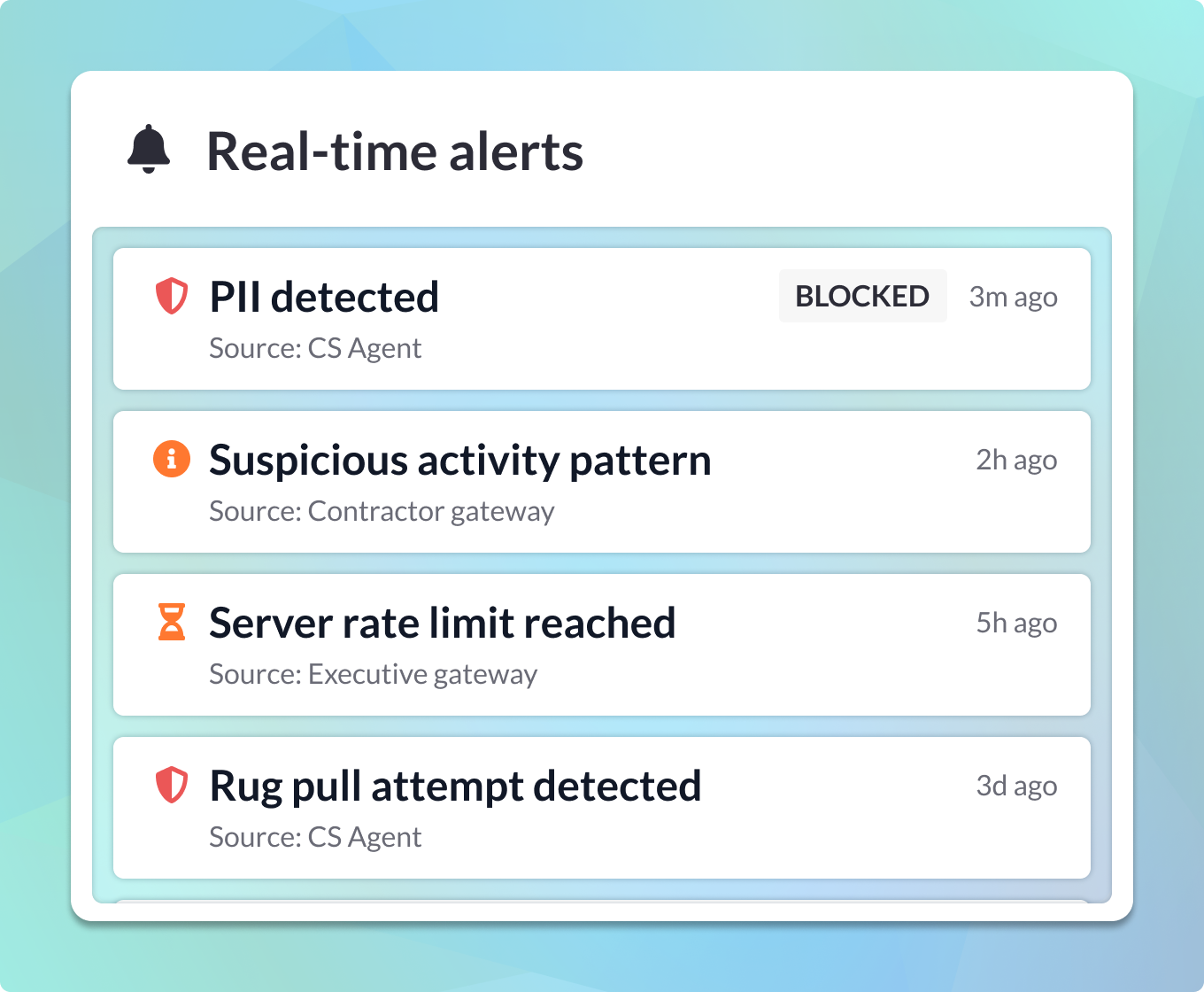
- An effective AI governance platform must supply a private registry of approved servers, individual user identity tracking, PII filtering, audit logging, and guardrails that execute policy during runtime.
- Open-source tools address narrow tasks (like bias testing or model cards) but lack the unified visibility and access control necessary for enterprise-wide deployments.
- Governance acts as an AI accelerator. Research shows that organizations maintaining comprehensive AI governance policies implement agentic AI at nearly twice the rate.
What Should an AI Governance Tool Actually Do?
The solution depends on where your specific risk resides. For a majority of current organizations, threat concerns have transitioned from “which model did we select” to “what can our agents reach.”
The Shift From Model Risk to Connection Risk
Two years back, AI governance centered on model evaluation: testing for bias, generating explainability reports, and tracking fairness metrics. While those elements remain important, an urgent new challenge has emerged. Agents currently link to CRMs, ticketing systems, code repositories, and financial databases using protocols such as MCP.
Consequently, the primary governance question has changed from “is the model behaving?” to “what data did the agent pull from Salesforce, who authorized it, and did PII reach the model?”
Key Capabilities of Modern AI Governance Platforms
A practical AI governance tool today needs to deliver at least these core capabilities:
- Inventory and registry: A single source of truth detailing all sanctioned AI tools, servers, and connections across the enterprise. In addition, you want a registry of what servers and tools your AI apps or agents can connect to.
- Access control: Individual user identities, role-based permissions, and tool-level provisioning to maintain exact visibility over access rights.
- Runtime guardrails: PII detection and redaction, pattern-matching rules, and automated capabilities to block or flag policy violations prior to model exposure.
- Audit logging: Comprehensive logs attributing every operation to a specific named individual, exportable directly to existing SIEM solutions (Splunk, Datadog, Sentinel) through OpenTelemetry.
- Policy enforcement: Active prevention mechanisms that block disallowed actions, moving beyond basic static policy documentation.
A tool covering only a single area acts as a point solution. It’s useful for its specific task, but not a full governance platform.
How AI Governance Tools Differ From Model-Eval Tools
AI governance tools and model evaluation tools represent distinct product categories addressing separate challenges. Conflating them stands as the most frequent mistake buyers make during software selection.
Model-Eval Tools
Model evaluation tools (frequently termed responsible AI toolkits) target the model directly. They analyze bias, calculate fairness across demographic groups, build explainability reports, and assemble model cards. Examples comprise open-source libraries for fairness checks along with commercial platforms that automate model risk assessments.
These tools answer: “Is the model producing fair, explainable outputs?”
AI Governance Platforms
AI governance platforms operate at the organizational layer. They administer policies, track active AI systems throughout the business, enforce access controls, and generate the audit trails required by compliance teams and auditors.
These tools answer: “Who is using AI, what can it access, and can we prove we’re in control?”
MCP Gateways
MCP gateways operate at the connection layer situated between AI agents and external tools or data sources. They enforce policies at runtime, giving them the power to stop a CRM server’s PII-heavy response before it hits the model, record every tool call with individual user attribution, and limit team access to specific servers.
These tools answer: “What is flowing between our agents and our business systems right now, and is it within policy?”
Comparing AI Governance Layers
Most enterprise buyers require coverage across all three distinct layers. The model-eval layer represents the most established sector. The organizational policy layer houses the AI governance platform category. The connection layer, where MCP gateways function, remains the newest area with the lowest coverage across most organizations.
| Model-Eval Tools | AI Governance Platforms | MCP Gateways | |
| Primary Focus | The AI model itself | The organizational policy layer | The connection layer |
| Key Question Answered | “Is the model producing fair, explainable outputs?” | “Who is using AI, what can it access, and can we prove we’re in control?” | “What is flowing between our agents and our systems right now, and is it compliant?” |
| Representative Functions | Bias testing, demographic fairness metrics, explainability reports, model cards | Policy management, central system inventories, access controls, audit trail generation | Real-time PII blocking, per-user tool logs, tool-level access restrictions |
What Tools Help Enterprises Govern AI Agents?
The marketplace has fragmented rapidly. Below is a breakdown of the primary categories, their functional roles, and their existing limitations.
GRC and Policy Platforms
Governance, risk, and compliance platforms such as OneTrust, Credo AI, and Holistic AI address the policy and compliance tier. They assist organizations in creating AI governance frameworks, aligning AI infrastructure with regulatory mandates, and compiling documentation for audits. A few have incorporated model inventory features.
Where they’re strong: Regulatory mapping, policy documentation, board-level reporting, risk scoring.
Where they fall short: They operate outside the active data path. While they can record a policy requiring PII redaction, they have no way to enforce it where the data actually moves. Some have started adding runtime guardrails, but those attach to model platforms rather than the connection layer.
MLOps and Model Monitoring Platforms
Solutions such as Weights & Biases, MLflow, and Arize target the model lifecycle: experiment tracking, model versioning, drift detection, and operational performance monitoring. Some have integrated governance features like model registries and approval workflows.
Where they’re strong: Model lineage, experiment reproducibility, performance monitoring in production.
Where they fall short: Their governance stops at the model itself rather than its external connections. An agent pulling customer data from HubSpot via an MCP server falls completely outside their purview.
LLM Gateways
LLM gateways like Portkey, acquired by Palo Alto Networks in 2026, and Kong’s AI Gateway manage traffic distribution between applications and language models.
Where they’re strong: Multi-model routing, token cost management, prompt-level guardrails.
Where they fall short: Positioned between the application and the model, most do not manage the bridge between agents and external tools. MCP traffic—the path agents use to access enterprise systems—runs through an entirely separate layer. Some are adding MCP support. Kong shipped an MCP gateway in late 2025 and Portkey offers one as well. In both cases it is a module bolted onto a model-routing platform rather than the architecture the product was built upon.
MCP Gateways
MCP gateways are engineered specifically for the connection layer. They proxy every data exchange occurring between AI agents (Claude, Cursor, ChatGPT, VS Code) and target MCP servers (Jira, GitHub, Salesforce, Google Drive, internal APIs). When teams configure for AI clients or agents to route through it, every tool call flows through the gateway, and policy enforcement takes place directly within the data stream.
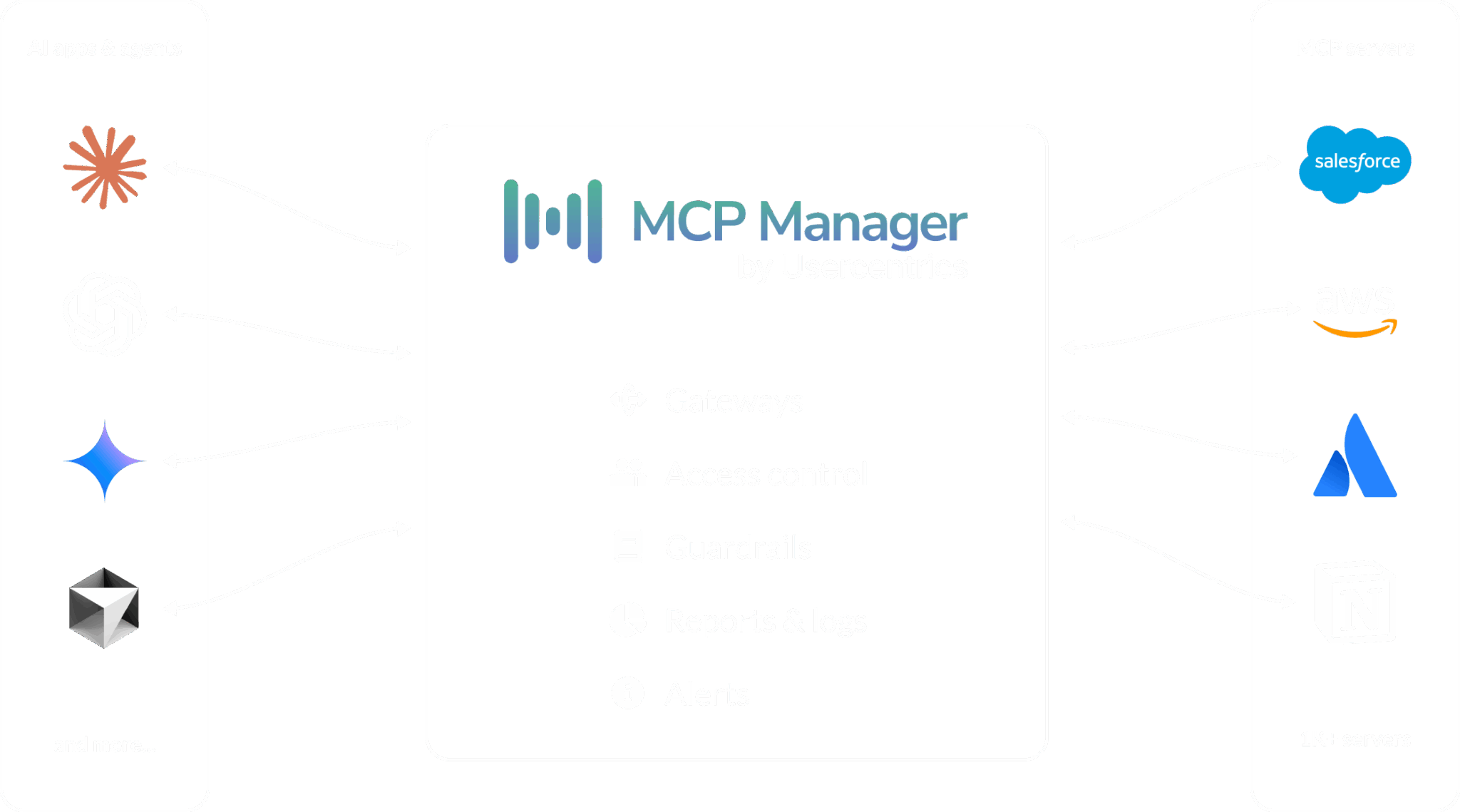
Where they’re strong: Runtime PII filtering, per-user identity and RBAC, audit logging with individual attribution, private registries of approved servers, guardrails that block or redact before data reaches the model.
Where they fall short: They govern MCP traffic, so if you want to govern the actual prompts users are inputting into AI clients or other aspects of AI use that are out of scope, you’ll need additional tooling. MCP gateways also only enforce policy rather than author it: they do not replace the platform that writes the rules.
Open-Source AI Governance Tools
Open-source alternatives address narrow components of the overall governance challenge. Fairness toolkits run bias checks, model card generators handle documentation, and basic open-source MCP proxies route general traffic.
The trade-off is clear: you gain flexibility and eliminate licensing costs, but sacrifice centralized administration, enterprise authentication integrations, automated PII filtering pipelines, and take on a maintenance burden that grows alongside team usage.
We experienced teams building custom MCP proxies, only to abandon them when authentication requirements and inconsistencies between server and implementations broke things. One security firm of ~350 people deployed a beta open-source MCP gateway and ended up hand-writing shims for every server it did not support, which took considerable effort and gave them very little operational visibility.
Evaluation Criteria for AI Governance Software
When choosing a vendor, these evaluation criteria reflect the most critical requirements raised by real-world buyers during software selection.
1. Coverage of Both Local and Remote MCP Servers
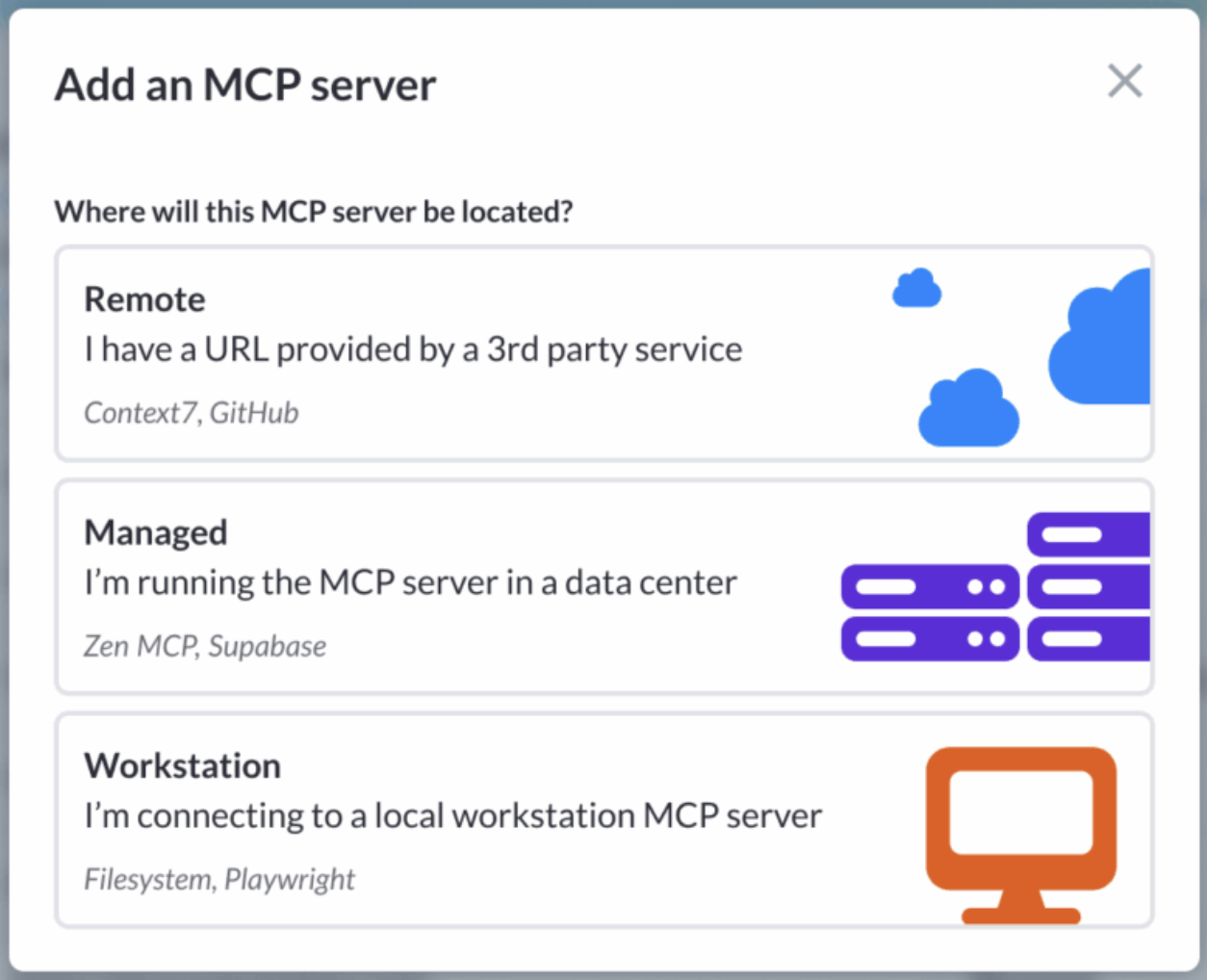
Most MCP gateways handle remote servers exclusively. However, developers regularly run local STDIO servers directly on their laptops. If a governance tool misses those, your unmonitored exposure expands with every engineer adding a local server. Seek a platform capable of tunneling local servers through the gateway so laptop-based MCPs remain controlled.
2. Per-User Identity, Not Shared Service Accounts
Shared service accounts ruin audit trail attribution. If three individuals access an MCP server using identical credentials, logs cannot identify who pulled specific data. This fails compliance requirements like DORA, which demands audit trails tied to named individuals. Your governance software must feature SSO integration with your identity provider (Okta, Entra ID, Google Workspace) alongside per-user OAuth across every connection.
3. PII Filtering That Actually Prevents Data From Reaching the Model
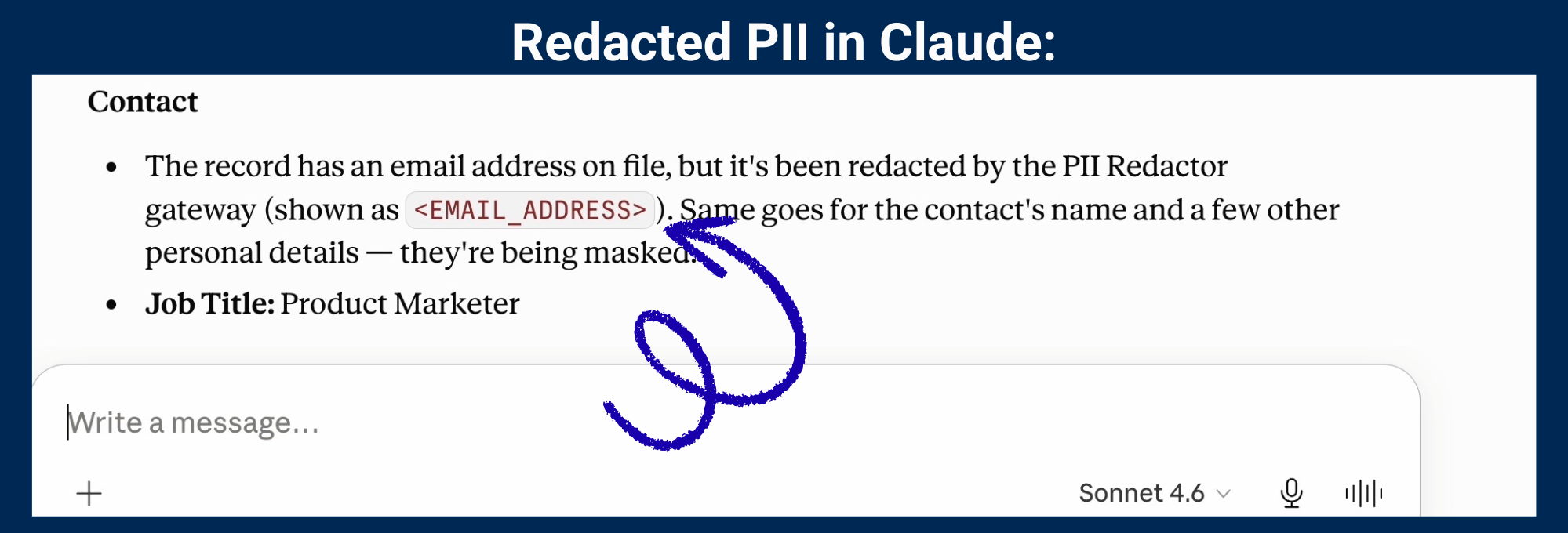
Identifying PII inside a log after an event differs completely from blocking PII prior to model delivery. Top-tier AI governance tools utilize multiple filtering engines (regex pattern matching, entity recognition for names and emails, and options for custom guardrails like AWS Bedrock Guardrails) directly at the gateway layer. Rules must allow team and server-level configuration, as HubSpot data carries different sensitivity levels than Jira data.
Example of PII redacted via MCP Manager:
4. Audit Logs With Forensic Depth
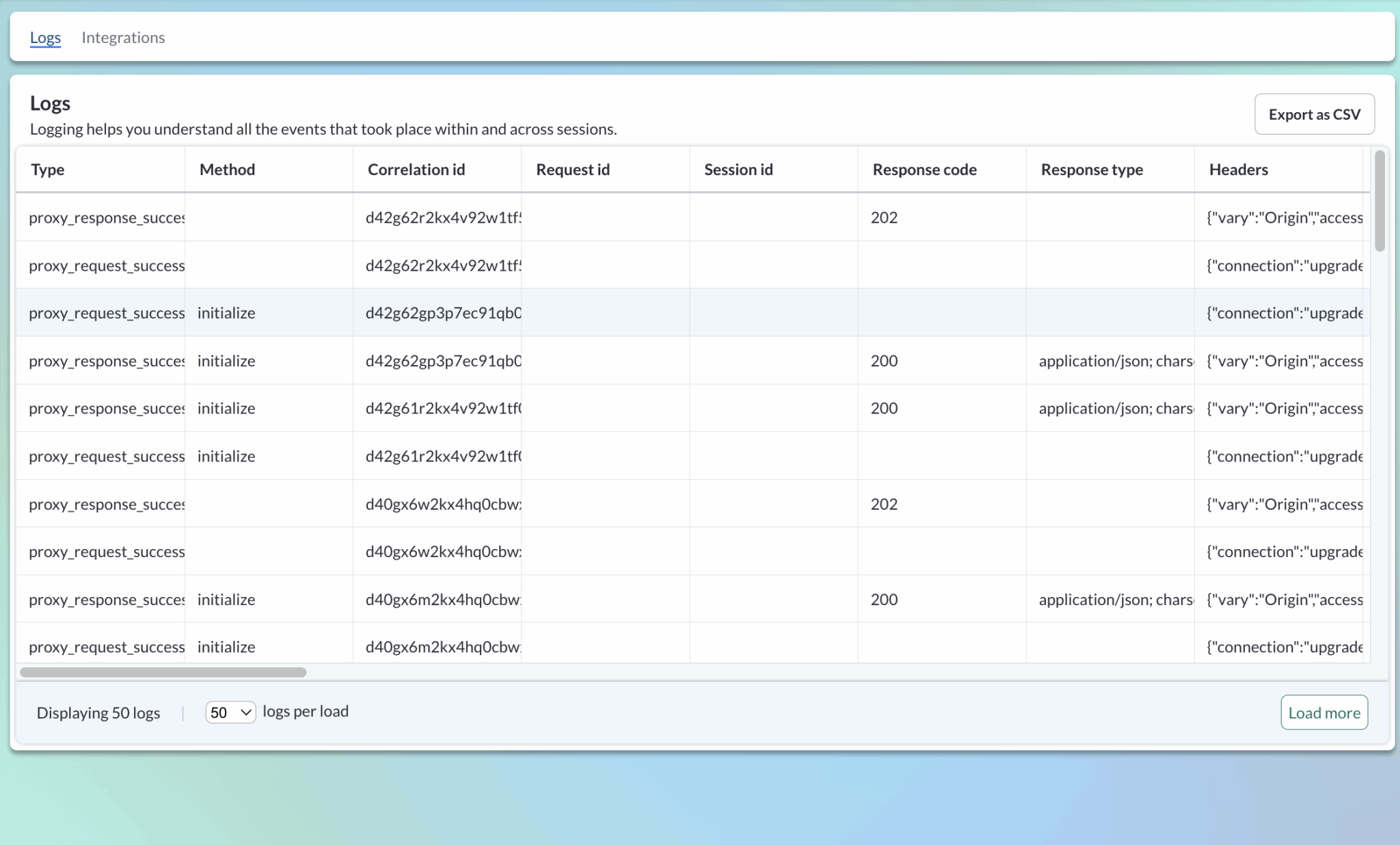
Standard MCP native logs work for basic debugging, but fall short for compliance audits. You require contextual metadata: identified user, team, server, tool, data categories present, triggered guardrails, and timestamps precise enough for forensic investigation. These logs should export directly into your existing observability stack via OpenTelemetry to feed Splunk, Datadog, or your security team’s preferred platform.
MCP Manager’s Audit Logs:
5. Ease of Use for End Users
User experience determines real-world adoption. If routing AI through a governed connection forces engineers to write manual YAML files and manage tokens, adoption stops with the small subset willing to handle that overhead. The rest of the company will abstain.
A fintech firm utilizing MCP Manager onboarded five separate teams to the platform, mostly consisting of non-technical staff. Business teams retrieve metrics for weekly meetings, and a product lead’s presentation updates automatically. This succeeded because the user workflow requires only opening Claude, clicking connect, and signing in once. No end user ever logs into the governance platform itself.
6. Reliability and Security Posture of the Vendor
An MCP gateway functions as a critical infrastructure component through which all agent-to-tool connections pass. Inquire about system uptime, fail-closed mechanics (does a call block or pass if a guardrail engine drops off?), and vendor security credentials.
Why Governance Is an AI Accelerator, Not a Brake
The predominant misconception among software buyers is that governance slows down operational momentum. AI governance data and statistics demonstrate the exact opposite.
As reported in the Cloud Security Alliance and Google Cloud’s State of AI Security and Governance report, organizations maintaining comprehensive AI governance policies demonstrate roughly double the early agentic AI adoption rates of those still creating policies: 46% vs 12%. Governance doesn’t delay deployment—it provides the baseline required to scale it.
The Bottleneck of Ungoverned Deployments
This occurs because lacking governance forces every new AI implementation into manual, one-off approval cycles. Legal checks data exposure, security evaluates the connection, and staff author unique policy exceptions. Applying this across every team seeking to connect AI to business systems creates a massive bottleneck that appears to be caution, but is actually an absence of operational infrastructure.
Enabling Bounded Freedom Through Automated Guardrails
Implementing robust governance transforms the workflow and establishes bounded freedom. Staff and departments move quickly with AI because safety guardrails are pre-installed. They operate without fear of exposing PII or connecting to risky servers because the MCP gateway blocks those outcomes automatically.
The Strategic Cost of Inaction
Failing to govern AI connections leaves organizations trapped in one of two major risks: keeping AI completely locked down and useless, or allowing unmonitored shadow AI to access enterprise systems. Ultimately, both scenarios cause companies to fall behind competitors who built a strong governance foundation to innovate safely.
What MCP Manager by Usercentrics Does
MCP Manager operates as an MCP gateway built specifically for controlled AI deployments. It delivers a private registry of sanctioned MCP servers, individual identity tracking via SSO, three distinct guardrail engines (regex, Presidio, and custom webhooks to services like AWS Bedrock), team/tool-level RBAC, and HIPAA-compliant audit logs exportable through OpenTelemetry.
The platform handles both remote and local MCP servers. Local servers run inside an isolated container tunneled directly to the gateway, maintaining developer laptop compliance without interrupting existing workflows.
What it avoids doing: it does not replace model evaluation tools, organizational policy suites, or endpoint security software. It functions strictly as the enforcement layer for agent-to-tool connections.
Ready to secure your agent-to-tool connections without slowing down your engineering teams? Book a demo if you need enterprise controls or must meet strict compliance regulations. You can also start a trial of MCP Manager today
Choosing the Right AI Governance Tool Starts With Knowing Where Your Risk Actually Sits
The market for AI governance tools continues to expand rapidly. GRC platforms, model monitoring systems, LLM gateways, and MCP gateways all operate under the “governance” label, yet they manage entirely different functions. Selecting the right solution requires identifying whether your primary risk stems from model outputs, policy enforcement gaps, or unmonitored agent-to-tool connections.
For most modern businesses, the connection layer represents the most critical unaddressed vulnerability. Agents routinely access internal business tools without centralized oversight or runtime controls. An MCP gateway directly resolves this issue.
FAQ
What are AI governance tools?
AI governance tools are software platforms that enable enterprises to manage, track, and execute rules surrounding AI deployment. They range from model-evaluation frameworks to runtime enforcement gateways that control agent access and data transmission.
What’s the difference between an AI governance platform and an MCP gateway?
An AI governance platform oversees high-level policies, risk scoring, and compliance documentation for the enterprise. An MCP gateway executes governance at runtime by proxying data flows between AI agents and connected tools, filtering PII, and logging all operations.
What should I look for in the best AI governance tools?
Key features include individual user identity integration, real-time PII filtering, forensic-level audit logs, coverage for local and remote MCP servers, compatibility with existing identity providers and SIEMs, and an end-user experience simple enough to drive non-technical adoption.
How do AI governance tools differ from model-eval tools?
Model-eval tools analyze the model itself for issues like bias, fairness, and explainability. AI governance tools control who uses AI systems, what those systems connect to, and how policies are applied. Because they tackle different problems, most enterprises utilize both.
Are open-source AI governance tools sufficient for enterprise use?
Open-source solutions focus on isolated features like basic MCP proxying or bias tests. They lack unified management, enterprise authentication, automated PII filtering, and vendor support guarantees. Numerous teams have attempted custom builds only to abandon them due to authentication and server dialect failures.
Does MCP Manager work with Claude, ChatGPT, Cursor, and other AI clients?
Yes. A single gateway URL supports all of them. Users point their preferred AI client at the gateway, authenticate once using SSO, and route all interactions through controlled infrastructure regardless of the client used.
How does an MCP gateway handle PII?
MCP Manager runs three guardrail engines per team: regex for structured patterns (such as SSNs), Presidio for entity detection (names, emails, dates of birth), and custom webhooks for external platforms like AWS Bedrock Guardrails. Rules are managed at the gateway level, enabling strict rules for CRM environments and relaxed settings for project management tools.
What regulations do AI governance tools help with?
The primary regulations driving runtime AI governance implementations include GDPR (notably right-to-erasure requirements), DORA (individual audit attribution within financial sectors), and HIPAA (redacting PHI before model transmission). Internal security policies frequently serve as an even more immediate driver.
Can AI governance tools prevent shadow AI?
A gateway cannot eliminate every circumvention attempt on its own. Comprehensive security requires layering the gateway alongside endpoint protection, network-level controls, and administrative configurations within AI clients (such as Claude Enterprise allow-lists) to eliminate potential coverage gaps.