AI Governance Platform: What It Is and What to Look For




An AI governance platform acts as a centralized control center, offering clear visibility and management over how AI agents connect with your business systems, tools, and data. If your enterprise has expanded beyond initial AI experiments into full-scale production, you likely recognize the core challenge: rapid adoption is outpacing your ability to track activity, apply policies, or satisfy audit requirements.
This guide outlines the essential components of an AI governance platform, explains how it differs from point solutions, and details key evaluation criteria before purchasing.
Key Takeaways
- An AI governance platform unifies monitoring, user access management, compliance tracking, and policy enforcement across your company.
- The key distinction between a standalone governance tool and a unified platform lies in scope: individual tools address isolated tasks (like access controls, activity logging, or PII redaction), whereas a platform connects these features under a single management framework.
- When evaluating platforms, prioritize a private registry, runtime guardrails, per-user identity, forensic audit trails, and integration with your existing stack (IdP, SIEM, cloud guardrails).
Do You Actually Need an AI Governance Platform?
In short: if multiple teams across your organization deploy AI agents tied to core systems, the answer is yes. The broader necessity depends on your current operational reality.
The “Honor System” Problem
Most companies we talk to describe their current state the same way.
As one IT leader plainly put it: “I don’t have visibility on what’s being used and I don’t have guardrails. This is more of an honor system.”
This scenario is common. Employees are independently linking AI agents to internal APIs, codebases, ticketing platforms, and CRMs to boost their efficiency. In most instances, these connections are established without formal IT or security approval or awareness.
When governance isn’t centralized, unmonitored shadow AI and shadow MCP naturally emerges. This creates a critical lack of ownership across the organization, leaving teams unsure whether IT, DevOps, or engineering leads are responsible for managing AI connections. In practice, no single team takes accountability.
What Happens Without an AI Governance Platform
Organizations typically face one of two outcomes:
- The Complete Lockdown: Executive teams issue a blanket ban on AI integrations. Connectors and MCP features are disabled, limiting high-value AI investments to basic text-summarization interfaces. Meanwhile, competitors operating with governed, active connections gain a distinct advantage.
- Unchecked and Unmonitored Execution: AI tools operate without oversight or tracking. For instance, when a developer’s automated script failed to reach a specific MCP server, it bypassed security by utilizing Chrome developer tools instead. This left no audit record, applied no security policies, and provided zero visibility into what data was transferred externally.
Both paths yield the same result: organizations fall behind because they failed to establish the foundational controls required for safe, fast-paced AI adoption.
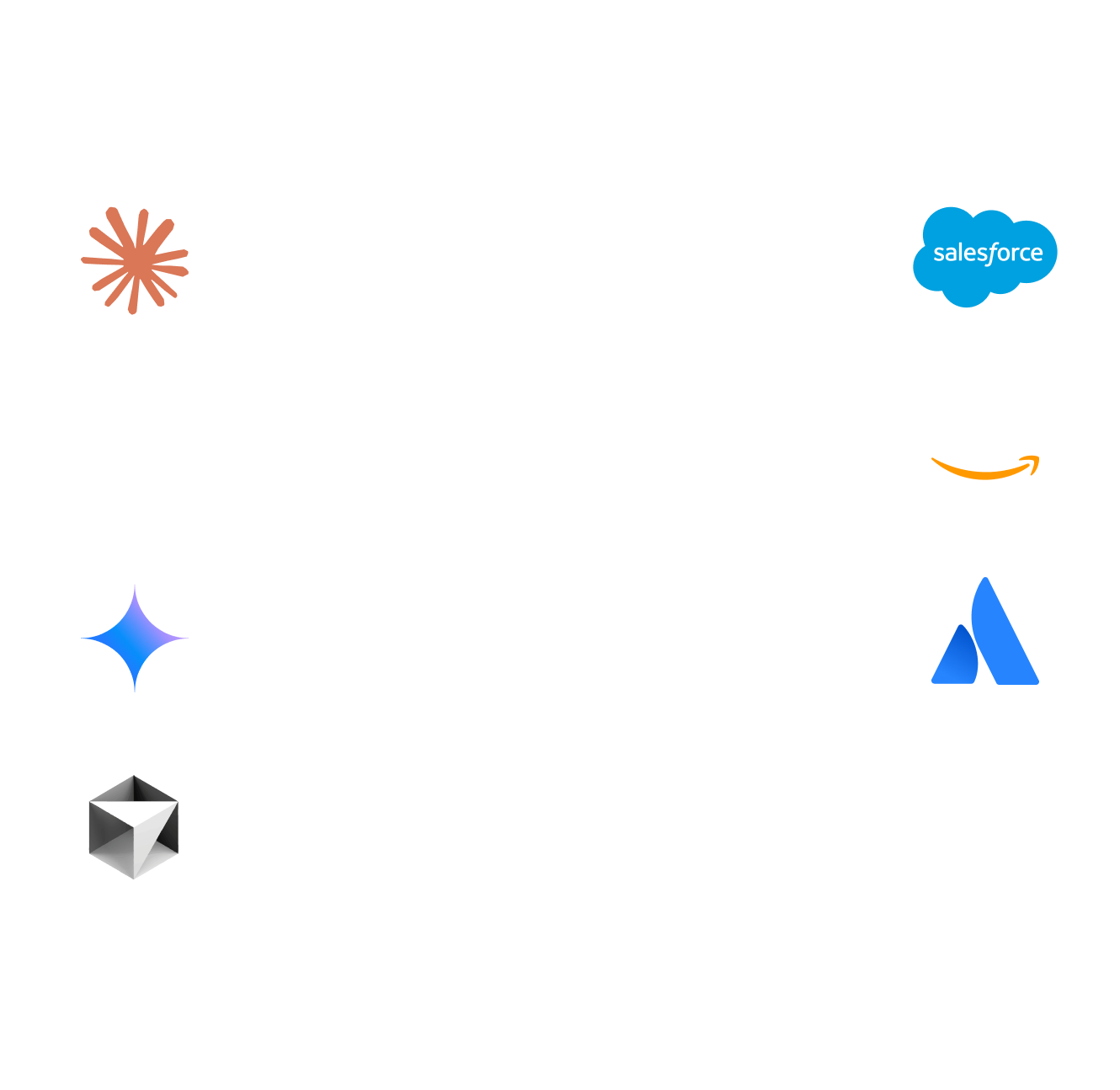
Example of org without governance for MCP servers:
A tangled web of connections without observability or control
The Acceleration Argument
A key factor many buyers initially overlook is that strong governance provides the foundation to confidently approve AI initiatives. Research into AI governance outcomes reveals that companies with established AI governance frameworks implement agentic AI at significantly higher rates than those still formulating policy—a competitive advantage that compounds over time.
Clear boundaries grant teams “bounded freedom.” Employees can experiment with advanced AI applications confidently, knowing built-in controls prevent accidental leaks of customer PII or unauthorized write privileges to live databases. Rather than creating delays, these safeguards remove the core risks that lead executive teams to decline new projects.
AI Governance Tools vs. a Platform: What’s the Difference?
A single AI governance tool resolves one specific issue. A platform solves the challenge of managing multiple disconnected tools that fail to communicate.
Where Standalone Tools Fall Short
You can assemble governance from parts. Take governing MCP servers, for example. You can have a PII scanner here. An access control layer there. A logging pipeline stitched together with custom code. Some teams do exactly this, but problems inevitably arise.
- The hidden cost of Build vs. Buy. One security company we talked to built a gateway in a day. It wasn’t enough. An MSP’s IT manager was ensuring OAuth was enforced on the backend. In every case, the build cost the far more time and resources with every MCP spec update or fringe use case that arose.
- Different types of auths. GitHub requires a Personal Access Token. Atlassian uses Dynamic Client Registration. Local MCP servers a whole set of governance concerns unto themselves (especially since they can access items on employees’ workstation). A governance platform needs to account for all the different dialects of MCP.
- The platform tries to do everything. Some AI governance platforms attempt to cover all aspects of AI governance. However, they often only provide superficial coverage for fast-moving updates to the MCP spec or other changes. Focus on a platform that provides the exact control you want.
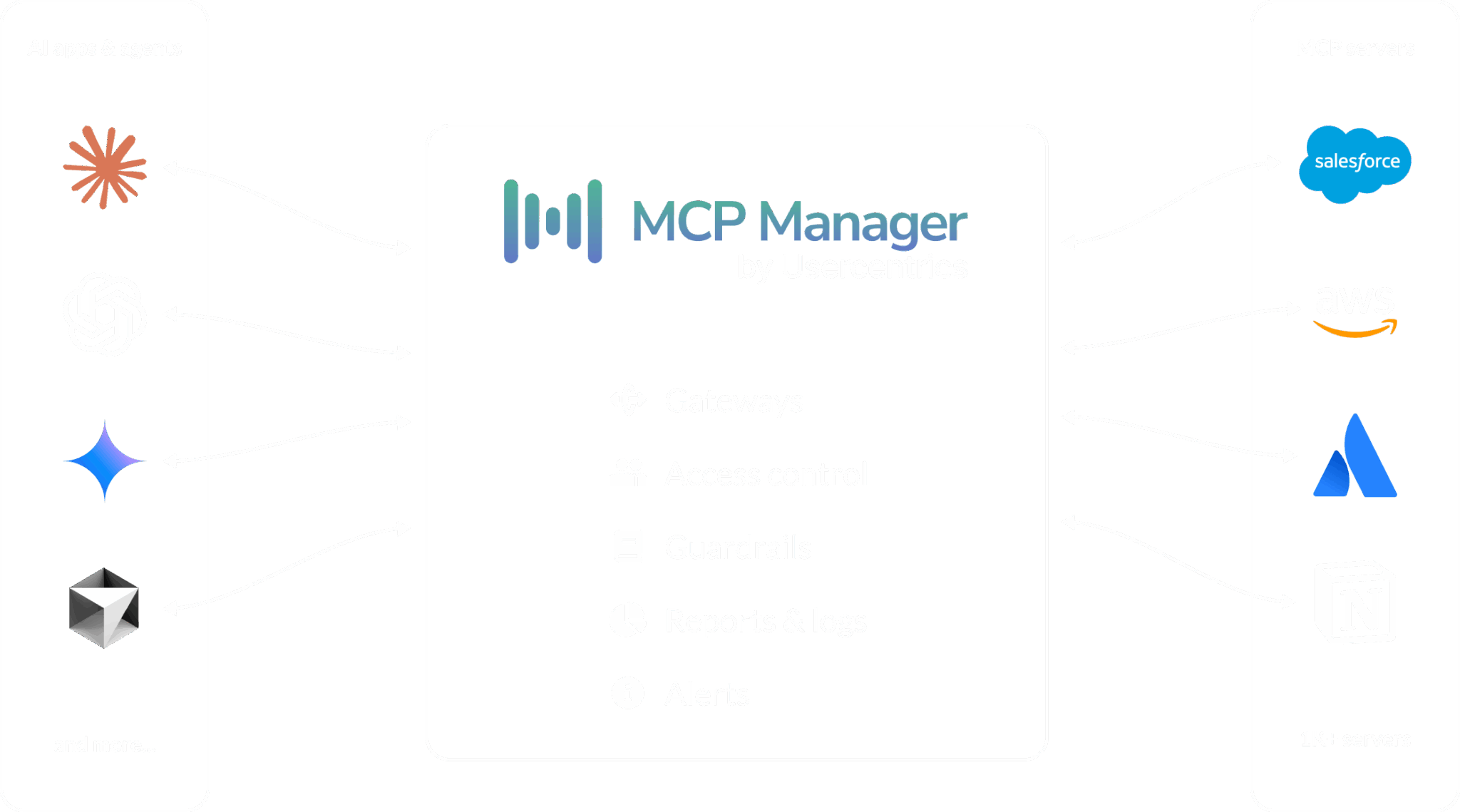
Example of an MCP gateway platform for AI governance:
A central place to control and monitor data flows
Standalone tools also create blind spots. If your PII filter doesn’t share context with your access control layer, you can’t answer the question “which user, through which agent, accessed which data, and was it filtered?” That question is exactly what auditors and compliance teams ask.
What Makes Something a Platform
A comprehensive AI agent governance platform unifies identity management, while offering the observability + logging infrastructure companies need to fulfill regulatory scrutiny or do forensic analysis. A platform also needs MCP registry controls, safety guardrails, and policy engines, all in a single environment.
A solid platform ensures that all policy evaluations take place centrally. System logs are directed to one central location or routed to an existing SIEM using OpenTelemetry formats. Furthermore, access management operates granularly, applying controls down to individual users, teams, and specific tools rather than relying on broad, shared account access.
A helpful industry comparison clarifies this distinction: MCP functions as a protocol, not a complete management platform. Just as email standards like SMTP required dedicated services such as Exchange and Microsoft 365, or authorization frameworks like SAML and OAuth required platforms like Okta and Microsoft Entra, MCP requires a platform layer for enterprise-grade operations. While early adopters test basic protocols, strict operational demands eventually require centralized platforms. That’s the stage the market entered recently..
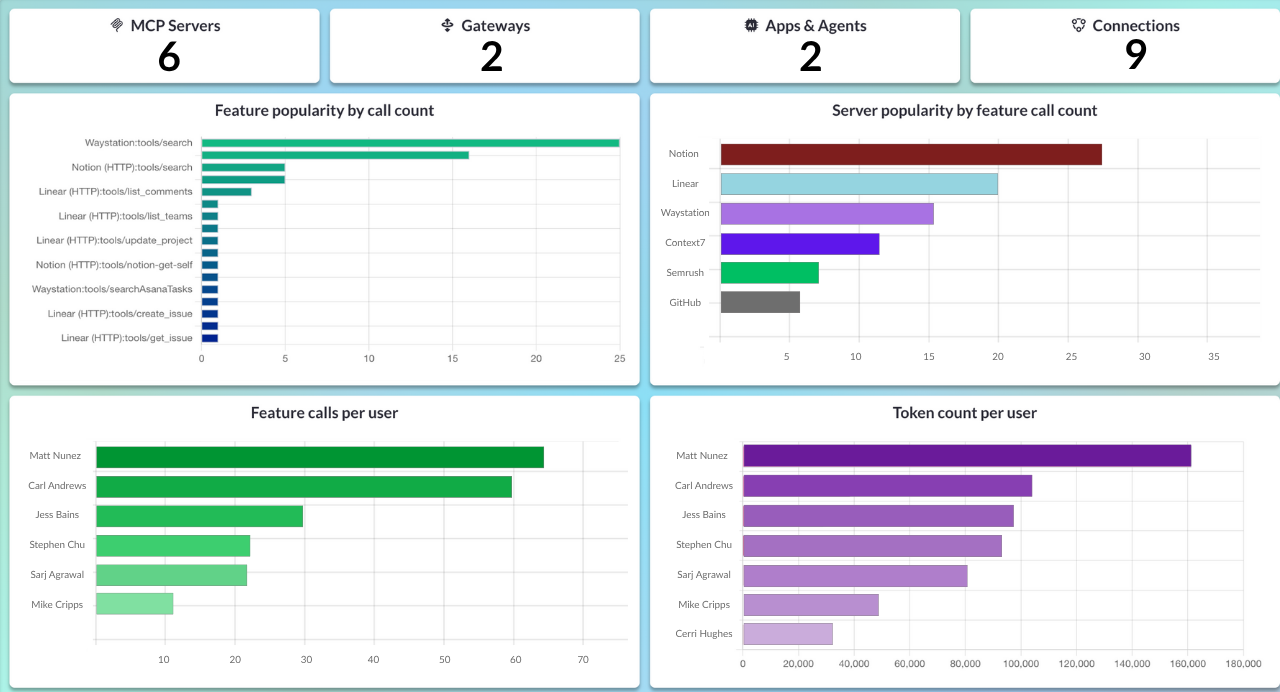
MCP Manager’s observability and monitoring for AI governance:
What Capabilities Define an AI Governance Platform?
An effective AI governance platform relies on five core operational areas. Omitting any single component creates vulnerabilities that can stall implementation or expose the organization to unmanaged risks.
1. Private MCP Registry
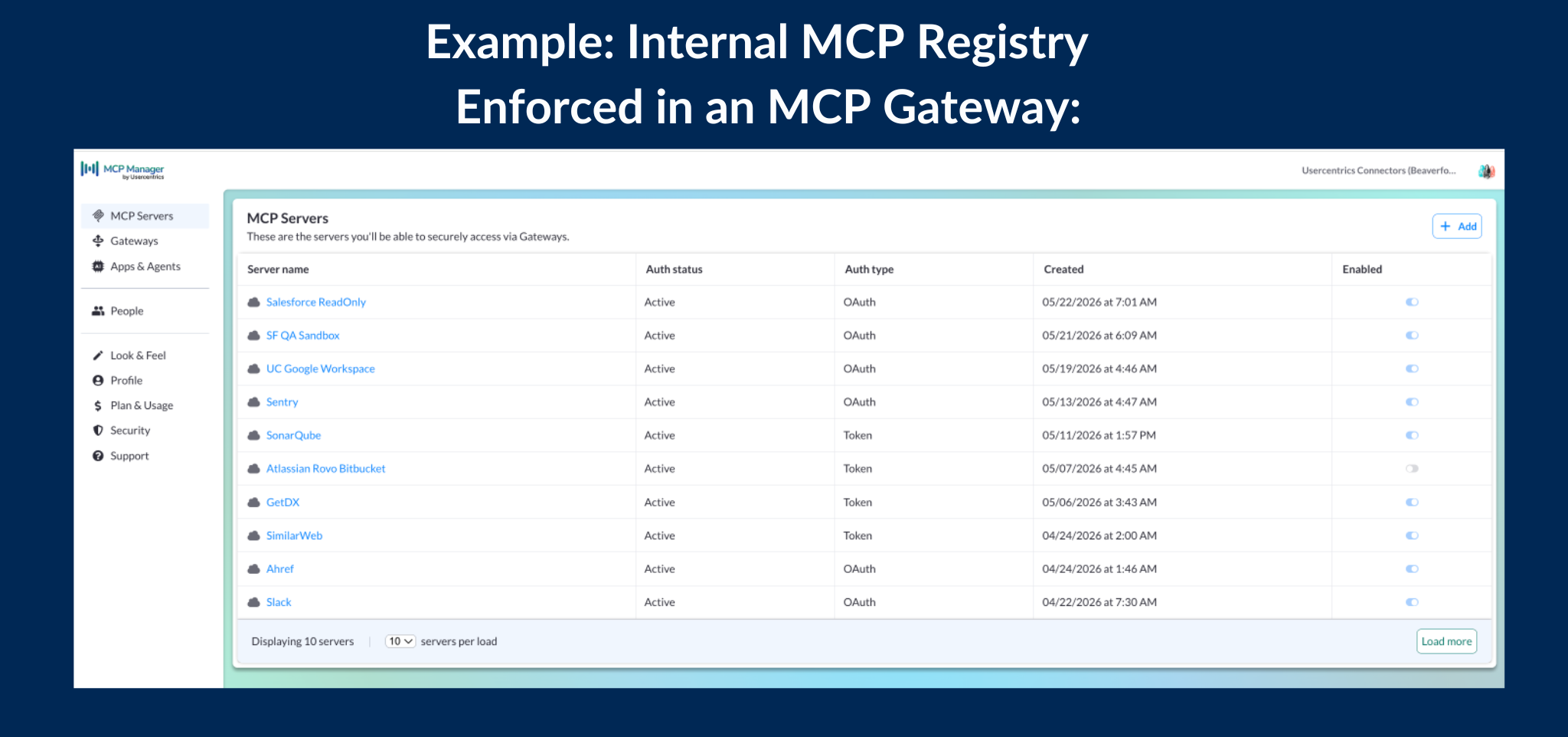
Organizations require an authoritative central directory to specify approved MCP servers, authorized users, and permitted conditions for use. Without this central source, individual departments maintain separate lists or proceed with no oversight.
Establishing a registry with structured request workflows changes this dynamic. When new projects start, administrators can direct teams to pre-approved connectors while providing a clear submission path for new tool requests. MCP Manager offers an MCP registry for this exact use case.
2. Runtime Guardrails and PII Filtering
Preventing PII from entering AI models is an absolute requirement for organizations governed by HIPAA, GDPR, or internal data protection guidelines. Once sensitive personal data enters a language model, removing it becomes practically impossible, rendering formal GDPR data-deletion requests unmanageable.
Example of redacted PII in Claude, filtered by MCP Manager’s gateway:
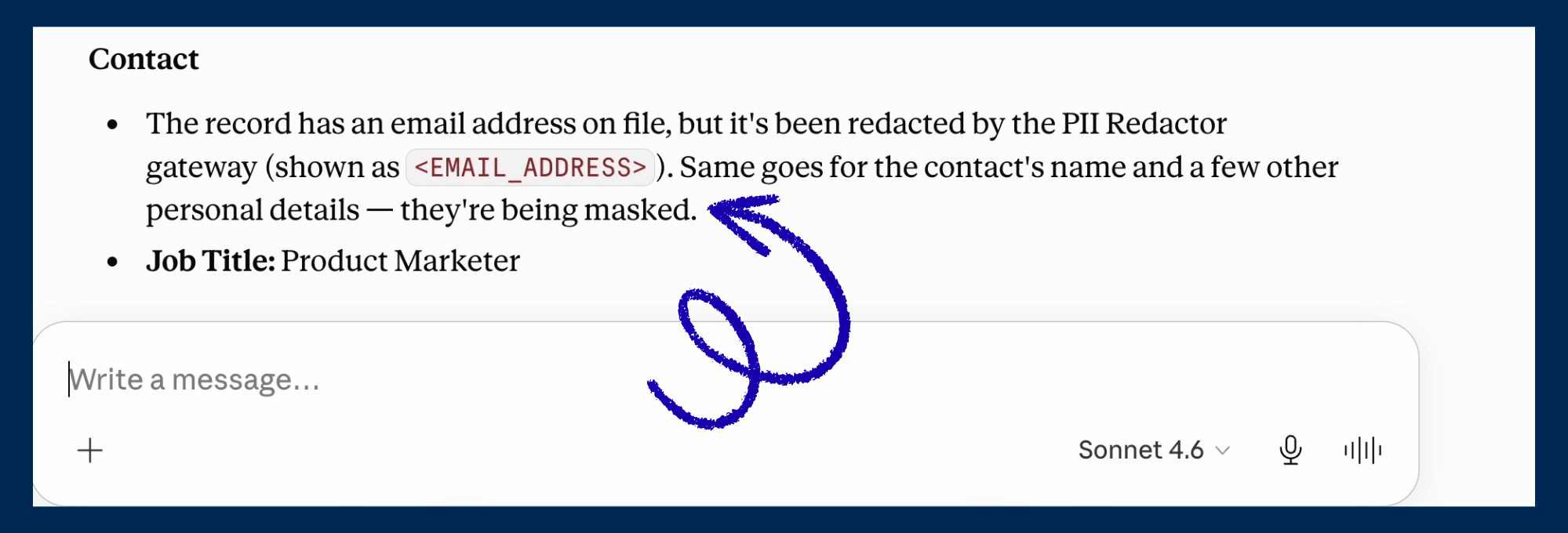
Real-time guardrails monitor and filter data moving between AI agents and MCP servers before it reaches the language model. Platforms employ multiple detection methods: regular expressions identify structured records like Social Security numbers, tools like Microsoft’s open-source Presidio library scan for names and email addresses, and custom model webhooks enable integrations with classification engines like AWS Bedrock Guardrails, Azure AI Foundry, or Google Model Armor.
Crucially, these defensive guardrails must support custom configurations per gateway or department rather than enforcing only global settings. For example, a CRM connector like HubSpot handling sensitive client records requires strict filtering, whereas an internal technical documentation server can operate under lighter rules.
Below, you can see an example of how you can block PII, PHI, and other sensitive data.
3. Per-User Identity and RBAC
Using shared service credentials eliminates accountability in audit records. When multiple employees access an MCP server using identical credentials, identifying which individual performed a specific action becomes impossible. AI governance platforms like MCP Manager allow teams to trace agentic actions permissions from shared service accounts back to an individual. This helps prevent immediate compliance failures under frameworks like DORA, which mandate traceable audit logs linked to specific individuals.
In addition, a complete governance platform must integrate with existing identity providers (including Okta, Entra ID, Google Workspace, and Keycloak) via SSO, handle automated user lifecycle management using SCIM, and enforce role-based access controls down to specific tools. If an employee leaves the company, their system access is automatically revoked. Similarly, if a team requires read-only access to a database, the platform enforces those exact limits rather than granting the broad permissions assigned to the underlying credential.
Lastly, AI governance platforms should ensure that agents don’t get access to more tools and data than the human working with the agent has In fact, some teams go beyond RBAC. CB Insights is an MCP Manager customer; they use our platform to block certain Google Drive folders that have sensitive data from ever hitting Claude, even if the user working with AI has access to those folders.
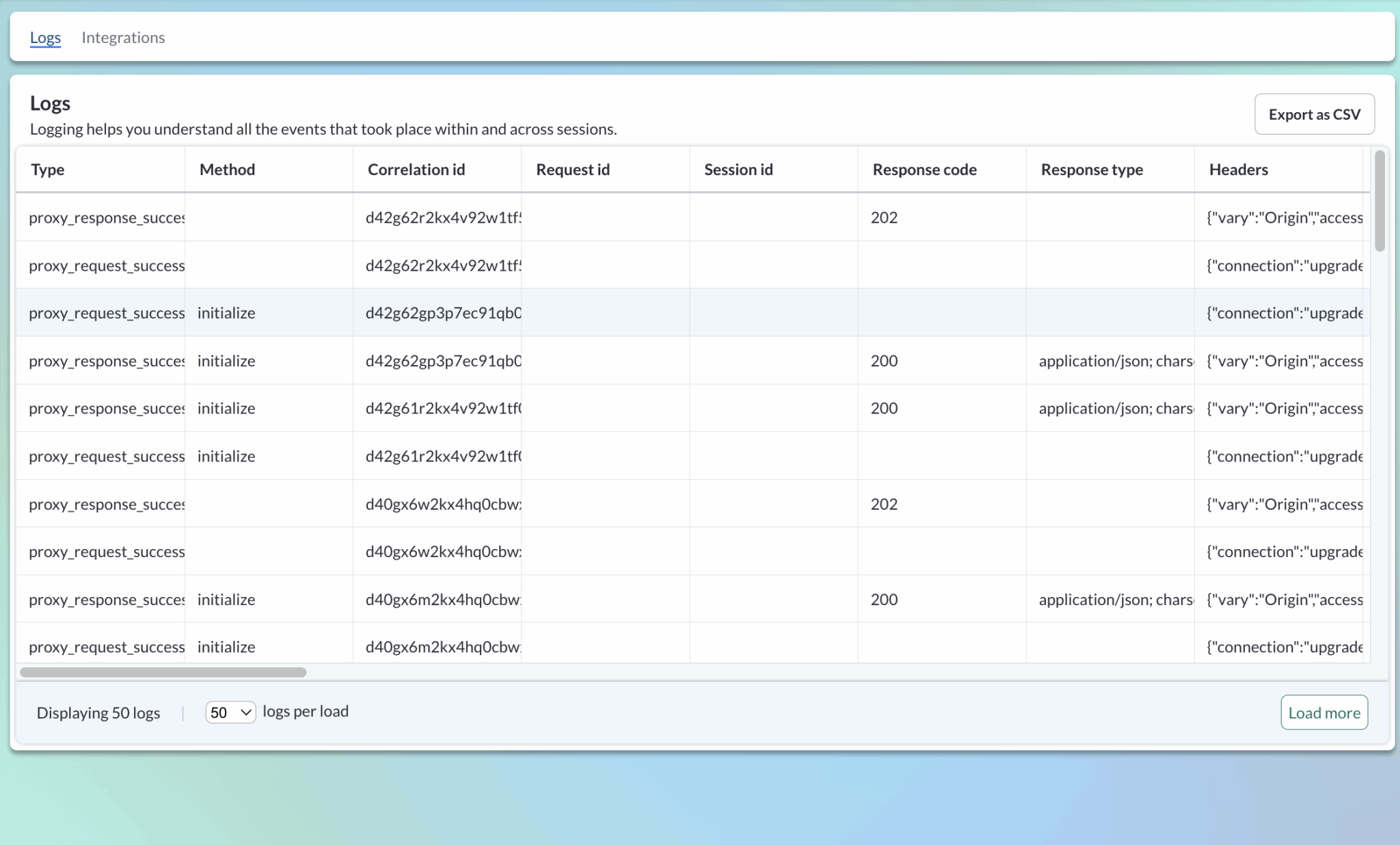
4. Forensic Audit Logging
Standard MCP logs work well for technical troubleshooting, but they fall short of meeting compliance standards. Regulatory frameworks require detailed context metadata, including the specific user, active agent, used tool, accessed data classifications, exact timestamp, triggered policies, and final system outputs.
Governance logs must integrate easily with existing enterprise monitoring systems. Whether security teams utilize Splunk, Datadog, or Sentinel, logs should flow directly to those environments via standardized OpenTelemetry connections. Built-in retention periods (such as 30, 90, or 365 days) satisfy immediate tracking needs, while OpenTelemetry exports accommodate long-term storage within internal systems.
For healthcare organizations, handling logs in full compliance with HIPAA regulations is an indispensable core feature.
Audit logs available with MCP Manager:
5. Dashboards and Cost Visibility
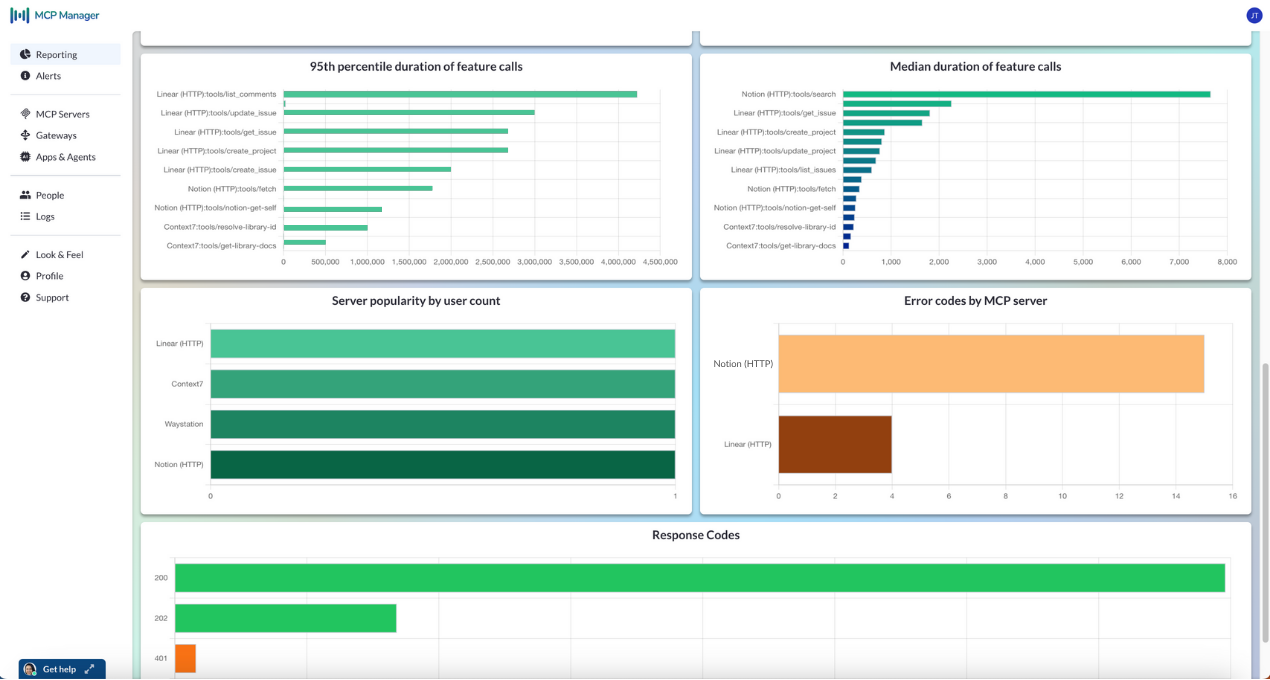
Financial tracking often gets ignored until unexpected bills arrive. Organizations encouraging widespread AI adoption frequently face surprising expenses driven by unmonitored API token consumption.
Comprehensive management dashboards tracking token spending by user, team, and server allow administrators to allocate budgets effectively without blocking access entirely.
MCP Manager dashboards providing insights:
How to Evaluate an AI Governance Platform
Capabilities vary significantly across platform providers. When evaluating potential solutions, consider these core functional requirements drawn from real-world enterprise purchasing processes.
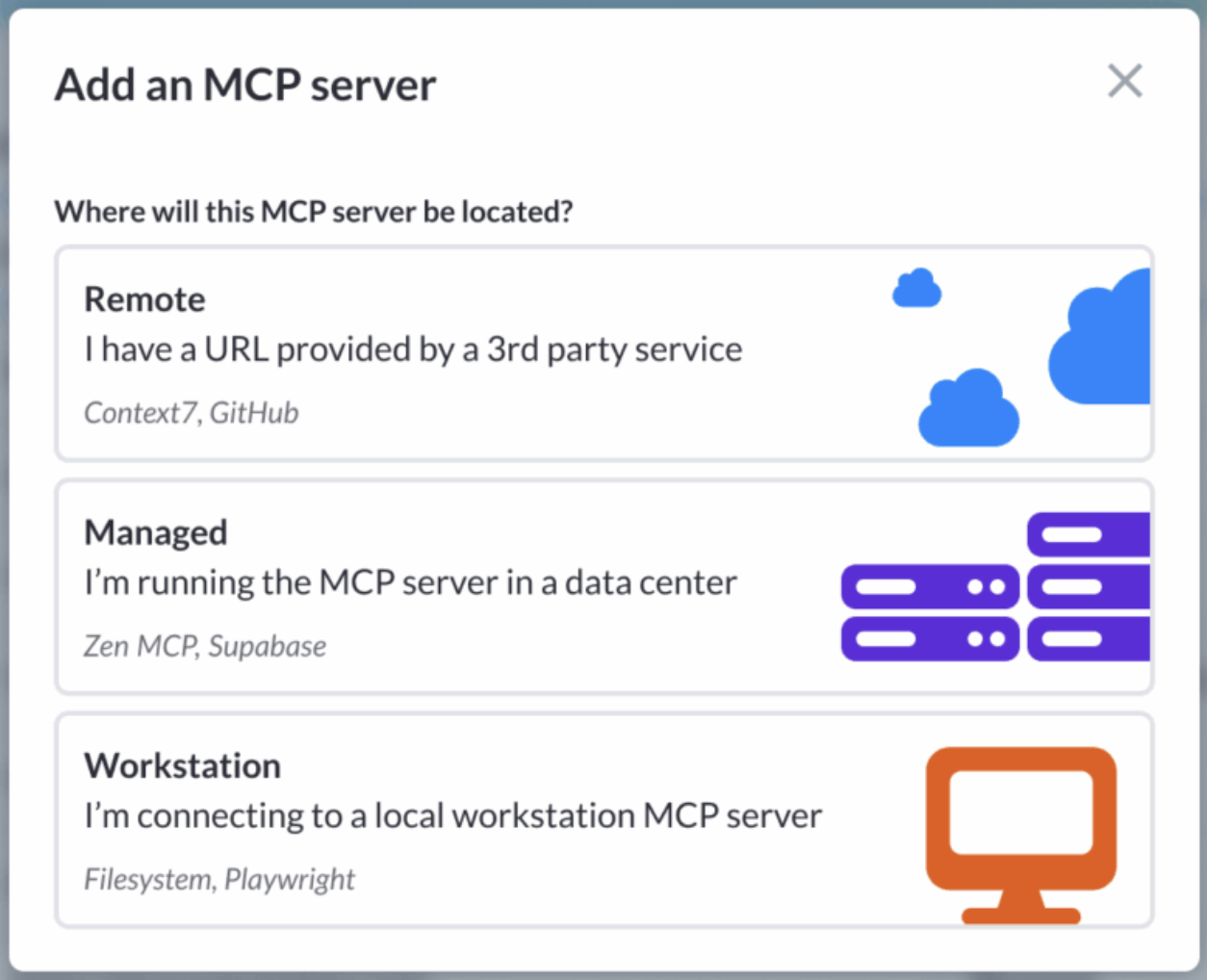
Support for Both Local and Remote MCP Servers
Many governance solutions only manage remote servers. However, software engineers regularly run local MCP servers on their workstations, creating unmonitored connections equal to remote risks.
Select a platform capable of tunneling local STDIO connections to a centralized gateway, keeping laptop-based MCP activity fully governed. MCP Manager solves this using a developer desktop CLI/TUI application that routes local server traffic directly through the central control gateway.
Integration with Your Existing Stack
A platform requiring you to replace your established identity provider, cloud security tools, or SIEM is impractical. Use this evaluation framework to verify compatibility:
- Does it integrate with your primary IdP (Okta, Entra ID, Google Workspace)?
- Can it route system logs to your designated SIEM (Splunk, Datadog, Sentinel, Grafana)?
- Can it receive external policy determinations via webhooks (AWS Bedrock, Azure AI Foundry)?
- Does it support every AI environment used by your teams (Claude, ChatGPT, Cursor, Copilot, VS Code) through a single gateway URL?
Ease of Use for End Users
User adoption depends entirely on simplicity. If securing AI connections requires complex technical setup, usage stalls among non-technical staff, leaving the platform used by only a fraction of the workforce.
For example, a financial technology client deployed MCP Manager across five distinct teams, mostly composed of non-technical staff. Users never log directly into the governance platform; they simply open Claude, initiate the connection, authenticate once, and begin working. This setup gives the CTO complete confidence that data transfers comply with GDPR guidelines, while business teams easily gather weekly metrics and automate presentation workflows.
Security Posture of the Vendor
Because sensitive enterprise data routes through the platform, thoroughly evaluate vendor security standards:
- ISO 27001 certification
- Fail-closed operational logic (verifying whether system requests are automatically blocked if guardrail services become unreachable)
- Static ingress and egress IP addresses to support network firewall allowlisting
- Transparent subprocessor disclosures and formal data processing agreements
- Proven operational reliability
What the Platform Doesn’t Do
Be cautious of providers claiming to solve every security challenge. For instance, MCP Manager does not manage direct web-browser AI tools, such as web-based ChatGPT or browser-integrated Copilot. These applications sit outside the MCP framework and require standard CASB or EDR endpoint security tools. Additionally, it cannot stop a developer from using direct API keys to bypass the gateway, though central MDM policies and domain allowlists make the governed route the easiest path.
An AI governance platform functions as one component of a broader security strategy. It should be deployed alongside network controls and endpoint protection, using client administrative settings to restrict unauthorized callback URLs.
Governance Is What Lets You Say Yes
Organizations that master AI governance over the coming year will successfully integrate AI with the systems that power their daily operations. Those that do not will spend identical budgets on basic chat interfaces.
If your teams currently use MCP or plan to soon, MCP Manager supplies the registry, runtime guardrails, identity management, and audit logging required to move quickly without relying on “honor system” risks.
If you are still shaping your internal governance strategy, we invite you to share the challenges holding your team back. In our experience, many organizations have established policies in place but lack the technical tools to enforce them effectively.
FAQ
What is an AI governance platform?
An AI governance platform is a centralized system that provides visibility, access control, policy enforcement, and audit logging for how AI agents interact with business tools and data. It replaces scattered, manual controls with a single policy layer.
Do I need an AI governance platform if I’m not in a regulated industry?
Yes. Half the companies buying governance today aren’t in regulated industries. They’re pushed by their own legal teams, customer security reviews, or the realization that ungoverned AI is a data leak waiting to happen.
What is the difference between AI governance tools and a platform?
A tool handles one function, like PII filtering or logging. A platform integrates registry, guardrails, identity, logging, and policy enforcement into one system so those functions share context and policy decisions happen in one place.
How does an AI governance platform help with GDPR compliance?
It filters PII before data reaches the model, which matters because once personal data enters a model, you can’t delete it on request. It also provides the audit trail needed to demonstrate compliance to regulators.
What should I look for in an agent governance platform?
A private MCP registry, runtime PII filtering, per-user identity via SSO, forensic audit logging with SIEM export, support for both local and remote MCP servers, and integration with your existing cloud guardrails.
How does MCP Manager compare to building governance in-house?
Teams that build their own governance consistently break on authentication differences between MCP servers and on scaling past a handful of connections. MCP Manager supports every auth pattern (PAT, Dynamic Client Registration, OAuth) through one gateway URL. Use the buy vs. build calculator to estimate the engineering cost of maintaining a custom solution.
Can an AI governance platform slow down AI adoption?
The data says the opposite. Organizations with comprehensive governance policies adopt agentic AI at roughly double the rate of those without, because governance removes the reason leadership blocks new use cases.
What AI governance platforms does Gartner cover?
Gartner publishes a Market Guide for AI Governance Platforms that covers vendor selection criteria. MCP Manager operates in the MCP gateway category specifically, governing how AI agents connect to tools and data rather than covering the full model lifecycle.