AI Compliance for Banking and Financial Services: What You Actually Need to Enforce




Financial institutions face a distinct challenge: automated AI tools are linking into live systems without the tracking records, user identification, or data safeguards that regulatory bodies demand. The distance between strict regulatory expectations and standard AI capabilities is wide, and it is expanding faster than most organizations realize.
This guide outlines the specific rules that take effect when AI tools touch financial records, the safeguards that pass regulatory inspections, and the technical choices that separate safe AI systems from risky ones that lead to data leaks. If you want to connect AI to customer databases, trading platforms, or account systems while staying compliant, start here.
TL;DR
- Financial AI compliance involves a mix of overlapping rules including GDPR, DORA, HIPAA (for health insurance), and agency guidance from groups like the OCC and SEC, which all hold distinct proof requirements.
- Standard MCP lacks logging features that link an automated action to a specific user, data type, or system operation, so basic agent setups fail standard regulatory checks.
- An MCP gateway resolves this issue by enforcing user-level identity tracking, scrubbing PII before it reaches the AI model, and keeping detailed logs aligned with DORA and GDPR mandates.
Why AI Compliance in Banking Is Different From General AI Governance
Financial compliance is not a single law. It is a combined stack of strict requirements, each backed by separate legal powers, and AI tools activate all of them at once.
The Regulatory Stack You Are Actually Dealing With
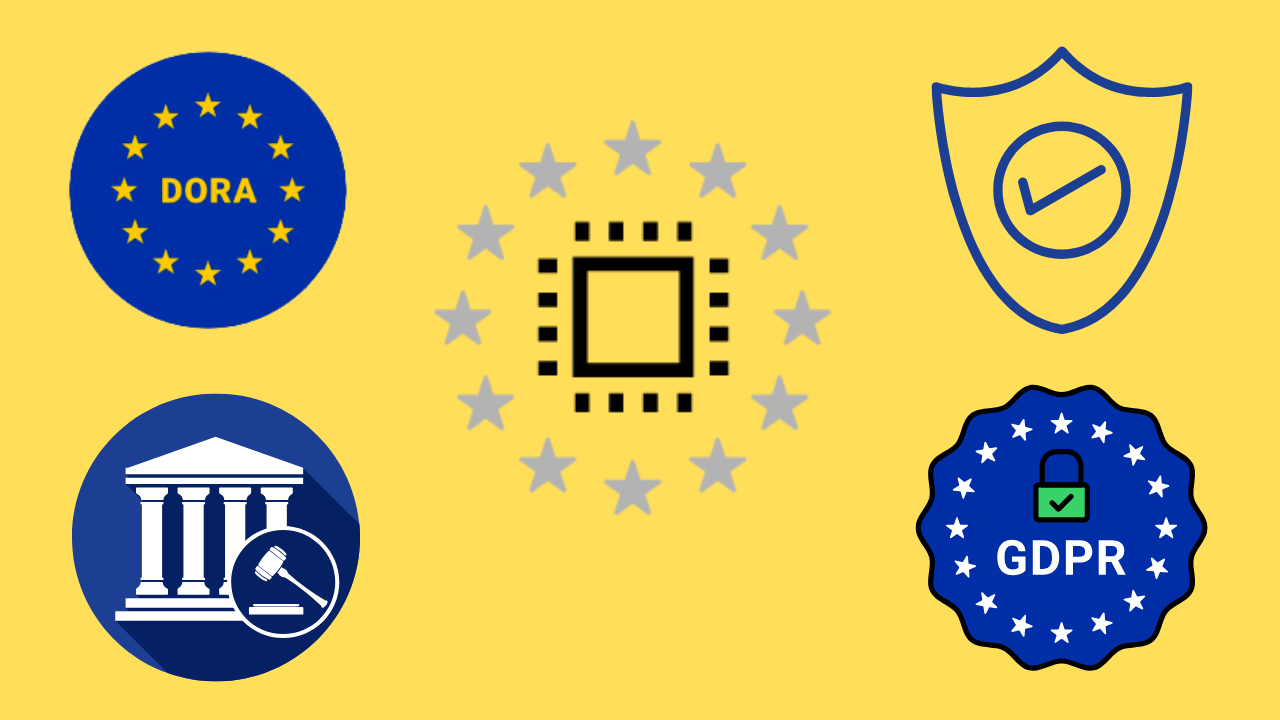
A bank using AI systems that touch client details must simultaneously handle: GDPR (for any EU individuals), DORA (for EU-regulated financial entities), GLBA rules (for US consumer records), and internal security policies set by corporate ISO 27001 or SOC 2 certifications.
In practice, a single task—like an AI fetching a customer’s transaction log to answer a help request—can trigger four or five regulatory standards at the same time. Each rule demands a different safeguard.
- GDPR mandates that personal details can be permanently erased upon request.
- DORA requires accountability for actions taken on your ICT systems, including through shared accounts
- GLBA demands strict protection around nonpublic private files.
- Meanwhile, your internal company rules might ban AI from touching client records entirely without specific controls.
This highlights the fundamental challenge of regulatory compliance: modern standards mandate auditing not only user actions, but the decision-making pathways behind system changes. When modifying core processes like customer fee structures, regulations require tracing every action to a specific individual.
Shared service accounts are common with SaaS tools that use MCP servers, and DORA’s technical standards permit them, but only where you can still say who did what through them. An ungoverned MCP connection can’t, which is where the accountability requirement will hurt an org using shared accounts with MCP servers.
Where Raw MCP Falls Short
The Model Context Protocol acts as a basic translation standard. It is not a security tool. Standard MCP does nothing to stop an AI from sending private financial details or confidential records directly into a third-party model. It contains no built-in logging system to connect a tool command with a specific user name, data class, or digital operation.
This lack of functionality creates major compliance issues because basic MCP logs are designed for system troubleshooting, not legal audits. If an inspector demands a report showing which staff member’s AI checked a specific customer file, along with the time and data returned, standard MCP cannot provide it.
The basic protocol also lacks tools for masking sensitive data. Once a customer record has been sent to a model provider, it sits in that provider’s retention: logs, conversation history, trust-and-safety records, kept on their schedule rather than yours. In addition, your customers might not have consented to you sharing this data elsewhere.
If you never recorded that the disclosure happened, you can’t honor an erasure request against it. Our recommendation, though, is to simply redact PII so that it never hits AI. By limiting the exposure of PII, you limit the surface area you have to navigate when a deletion request arises.
Which Regulations Govern AI in Banking, and What They Require
Every legal framework creates exact, enforceable duties. Understanding which rules apply to your setup is the first step toward building systems that pass real inspections rather than just offering surface-level compliance.
DORA: The Tightest Regulation-to-Capability Match
The Digital Operational Resilience Act (DORA) has applied since 17 January 2025. Its technical standards (Commission Delegated Regulation (EU) 2024/1774) require each staff member to hold a unique account and require access-control and identity-management events to be logged. Article 21(c) allows generic or shared accounts only where “the accountability for actions taken through those accounts shall be maintained.”
DORA impacts financial AI setups directly: if your AI tools rely on shared system accounts to read live databases, you cannot track actions back to a single person. An MCP gateway using individual Single Sign-On (SSO) fills this gap by logging the specific employee who launched the task, even if the underlying MCP connection uses a shared account credential.
GDPR: The Right to Erasure Problem
GDPR is frequently mentioned by financial sector buyers, but its main point of friction is very specific: the right to be forgotten.
When a client’s name, email or date of birth is sent to an AI model, it leaves your control. The provider holds it under their retention policy, and you never have a mechanism to reach into a third party’s log and remove that data on request. An Article 17 request then lands on a disclosure you cannot unwind.
Prevention is the only reliable fix: strip out personal details before data reaches the model. This step requires real-time PII scanning and scrubbing at the gateway level for every response sent from an MCP server back to an AI tool. Regular expression patterns (to catch format-based data like Social Security numbers) and named-entity recognition (to catch names, emails, and dates) must process every outgoing payload.
HIPAA: The Insurance Subsidiary Exposure
US health insurance firms and health-focused financial groups must follow HIPAA alongside standard financial rules. The technical goal remains the same: strip out specific private data points (names, addresses, birth dates, Social Security values) before any packet reaches the AI model.
What makes these deployments complex is how organizations stack HIPAA alongside additional operational standards. In health insurance contexts, HIPAA rules strictly dictate that any exposed PHI must be shielded immediately. At the same time, maintaining framework certifications like SOC 2 and HITRUST introduces overlapping requirements for full audit tracking across everything moving through the MCP.
MCP Manager provides pre-built, HIPAA-ready logging setups designed specifically to satisfy these combined compliance demands.
Sector-Specific Guidance: OCC, SEC, and Consumer Protection
In addition to major privacy laws, US banks must follow direct oversight and policy guidance from federal agencies regarding automated risk management, public AI disclosures, and automated customer support tools. The CFPB warned in a 2023 report on chatbots in consumer finance that institutions risk legal penalties if automated chatbots give incorrect details about account fees, interest rates, or account standing.
Every guidance document lands on the same requirement: you must track what your AI systems do, know which files they open, and verify that their outputs are accurate using permanent, exportable records.
How Banks Prove AI Compliance to Regulators
Demonstrating compliance requires clear, working evidence that rules are enforced automatically across your entire IT setup every day.
Forensic-Grade Audit Logging
A complete, audit-ready log for financial AI operations must track: the user who started the request, the specific agent running the action, the target MCP server, the tools triggered, the exact data sent and received, and precise timestamps for every step.
MCP Manager records this full sequence and forwards it over via OTel to your own observability or SIEM platform, such as Datadog, Splunk, or Grafana. These logs serve as legal evidence rather than simple system notes. They attach detailed metadata to support deep security audits, covering employee IDs, data classifications, command choices, and exact execution times.
For DORA compliance, recording individual user IDs is the essential feature. Even if the connected MCP server operates on a shared account, the gateway identifies and logs the real person who started the task.
PII Redaction as a Control, Not a Feature
Within the financial sector, hiding private data is a mandatory security gate that auditors test directly.
MCP Manager runs three distinct safety engines for each team: regex text matching, Microsoft’s Presidio engine for named entities, and a custom integration slot to connect tools like AWS Bedrock Guardrails or Google Model Armor via webhooks. Filters are configured per gateway rather than globally, letting you apply strict scrubbing to customer CRM connections while keeping internal technical wikis more open.
Identity and Access Controls That Map to Least Privilege
Financial regulators require companies to follow least-privilege principles. An AI tool must never hold broader system access than its current task demands, even if the user operating it holds full system rights.
Most organizations overlook this operational risk early on. A human worker opens files one by one. An AI system can scan thousands of files across an entire directory in seconds and pass all that text directly to an external model. Teams usually realize they must restrict AI access well below human privilege levels halfway through a project rollout.
MCP Manager uses team-based gateway access and tool-level permissions to let system admins define which departments can reach specific MCP servers (and what tools and data they can use when reaching those servers). Toggling read-only versus write access is handled at the individual tool level. This approach lets you enforce strict limits on AI agents without blocking human employees who need full system access for their daily work.
What Controls Satisfy Financial Services AI Audits
Financial auditors look for concrete, working security controls. Here is what a managed MCP setup delivers that an unmanaged environment cannot match.
A Private Registry of Approved Servers
The first step in securing your setup is tracking active connections. Most financial IT teams we interview cannot answer a basic question: how many MCP servers are currently connected to AI agents across your firm?
A central MCP registry gives you an official index of approved systems. Strict onboarding steps ensure that new server integrations go through formal security checks instead of appearing quietly on the network.
That clear operational structure is what auditors demand: an accurate system inventory, a documented review step, and active blocking of unapproved connections.
Continuous Monitoring, Not Periodic Review
Financial regulators now demand real-time monitoring rather than occasional manual checks. Live tracking screens displaying API token usage, tool request volumes, and rule violations give compliance officers constant oversight.
MCP Manager provides visual dashboards that highlight which servers, tools, and employees account for the highest token usage, which privacy filters are triggering, and where policy breaches occur. This activity data maps directly into standard audit reports.
The Certification Layer
SOC 2, ISO 27001, and HITRUST are industry certifications that turn broad laws into repeatable, testable checks. MCP Manager is operated by the same team managing Usercentrics’ global cloud footprint, which maintains ISO 27001 certification backed by zero-non-conformity audit scores.
Building the Governance Foundation for Financial Services AI
Financial leaders must view regulatory controls as an enabler for AI adoption rather than an obstacle.
The recommended deployment path follows these steps:
- Install an MCP gateway as the centralized control point for all agent-to-tool connections.
- Mandate user-level authentication via Single Sign-On (SSO) to track every action to a real employee.
- Apply automatic PII scrubbing at the gateway level so private details never reach outside models.
- Export event logs into your existing security platform (SIEM) for ongoing tracking and audit reporting.
- Maintain a closed software registry with formal approval steps to control permitted tool connections.
One fintech company uses MCP Manager across five separate divisions, mostly made up of non-technical staff. Business teams pull system metrics for weekly reviews, and executive slide decks update automatically. The CTO has full proof that no private user details are escaping to breach GDPR rules. Employees do not interact directly with the MCP Manager dashboard; they simply open Claude, connect, complete a single sign-on prompt, and begin working.
This demonstrates how governed AI functions in practice: completely frictionless for staff, yet fully visible to compliance teams.
Where Financial Services AI Compliance Is Heading
The financial institutions leading the market today are those that treated AI governance as essential core infrastructure rather than administrative overhead. They connected AI systems directly to critical production platforms including CRMs, trading tools, and customer support channels using security controls that satisfied regulators from day one.
If your organization is exploring how to link AI agents to financial databases without breaking regulatory limits, MCP Manager is built specifically for this operational challenge. Start a free trial or schedule a live demo to evaluate how user-level identity tracking, real-time PII scrubbing, and forensic log creation work in live environments.
FAQ
What is AI compliance in financial services?
AI compliance in financial services means following specific regulatory mandates when AI tools access sensitive financial records. This involves keeping complete audit logs, masking private personal data, attributing every digital action to a human user, and maintaining clear system controls that satisfy inspectors from agencies like the OCC, SEC, and EU regulators.
How do banks prove AI agent compliance to regulators?
Banks demonstrate compliance by presenting forensic audit trails that link every agent action to a specific employee, showing active PII filtering that blocks private records from entering AI models, and keeping an approved list of authorized AI connections backed by documented review workflows.
Which regulations apply when AI agents access financial data?
GDPR, DORA, GLBA, HIPAA (for health insurance activities), and specific regulatory guidelines from financial authorities apply at the same time, each carrying separate evidence standards. Internal policies tied to ISO 27001 or SOC 2 certifications often add extra operational requirements.
What is the difference between AI governance and AI compliance in banking?
AI governance covers the broader framework of internal policies, rules, and operational structures you establish. AI compliance is the measurable proof showing that those rules are enforced continuously across your systems. Auditors require active system controls and verified digital logs rather than policy papers alone.
Can an MCP gateway satisfy DORA audit trail requirements?
Yes. DORA’s technical standards allow shared service accounts only where accountability for actions taken through them is preserved. An MCP gateway using user-level SSO logs the exact person who launched an agent command, even if the target server runs on a shared service credential, directly resolving the tracking gap.
How do you prevent PII from reaching AI models in financial services?
Use multi-layered PII scanning and scrubbing directly at the gateway layer: deploy regex patterns for structured data (like Social Security numbers and credit cards), named-entity recognition for client names and email addresses, and external guardrail services like AWS Bedrock for advanced content classification. Filter all outbound responses before they travel to the model.
What happens if a financial institution deploys AI without governance controls?
Operating without governance prevents you from producing valid audit records, attributing system tasks to individual workers, or proving data protection. This triggers simultaneous regulatory failures under DORA, GDPR, and GLBA, while leaving your team unable to investigate system incidents effectively.
How does data residency affect AI compliance for European financial institutions?
European financial institutions often require that data processing occurs entirely within EU boundaries under national sovereignty rules, or their own internal policy. This requirement applies directly to the gateway handling the traffic, not just the connected AI model. The physical location where data is processed remains a regulatory factor regardless