MCP Adoption Statistics 2026




Since Anthropic launched Model Context Protocol (MCP) in November 2024, builders got to work quickly. It’s rare for a spec to come out with such highly detailed and powerful libraries in multiple languages out of the gate. But MCP did just that.
It’s clear that builders have flocked to the new protocol. However, the question remains: who else is? While there aren’t clear-cut MCP adoption statistics that clearly show us how many end users the protocol has, there are a few data points that we can look at to infer what MCP adoption looks like today.
The widely shared meme below begs the question: “How many users are adopting MCP?” Here, we’ll look at the statistics that indicate overall MCP adoption in 2025.
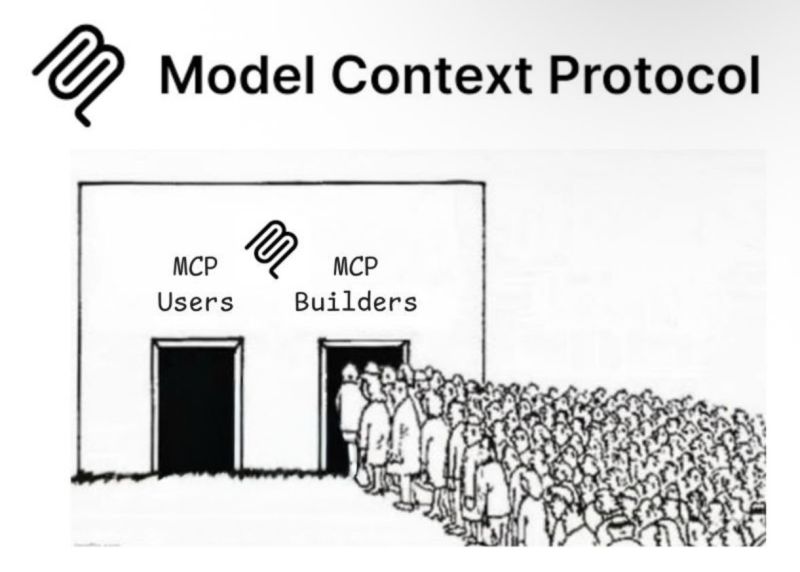
Let’s take a look at what we can deduce about MCP adoption with the following statistics.
Why Remote Servers Are the Best Proxy for MCP Adoption Stats
It’s impossible to know how many people use an MCP server. While we know how many servers have been released (due to the many registries out there), it’s unclear how many people actually connected them to agents and provisioned them to other users (which you can do with an MCP gateway).
However, we have a pretty decent proxy for overall MCP adoption: the popularity of remote servers (one of the three MCP server deployment options ). Let me explain.
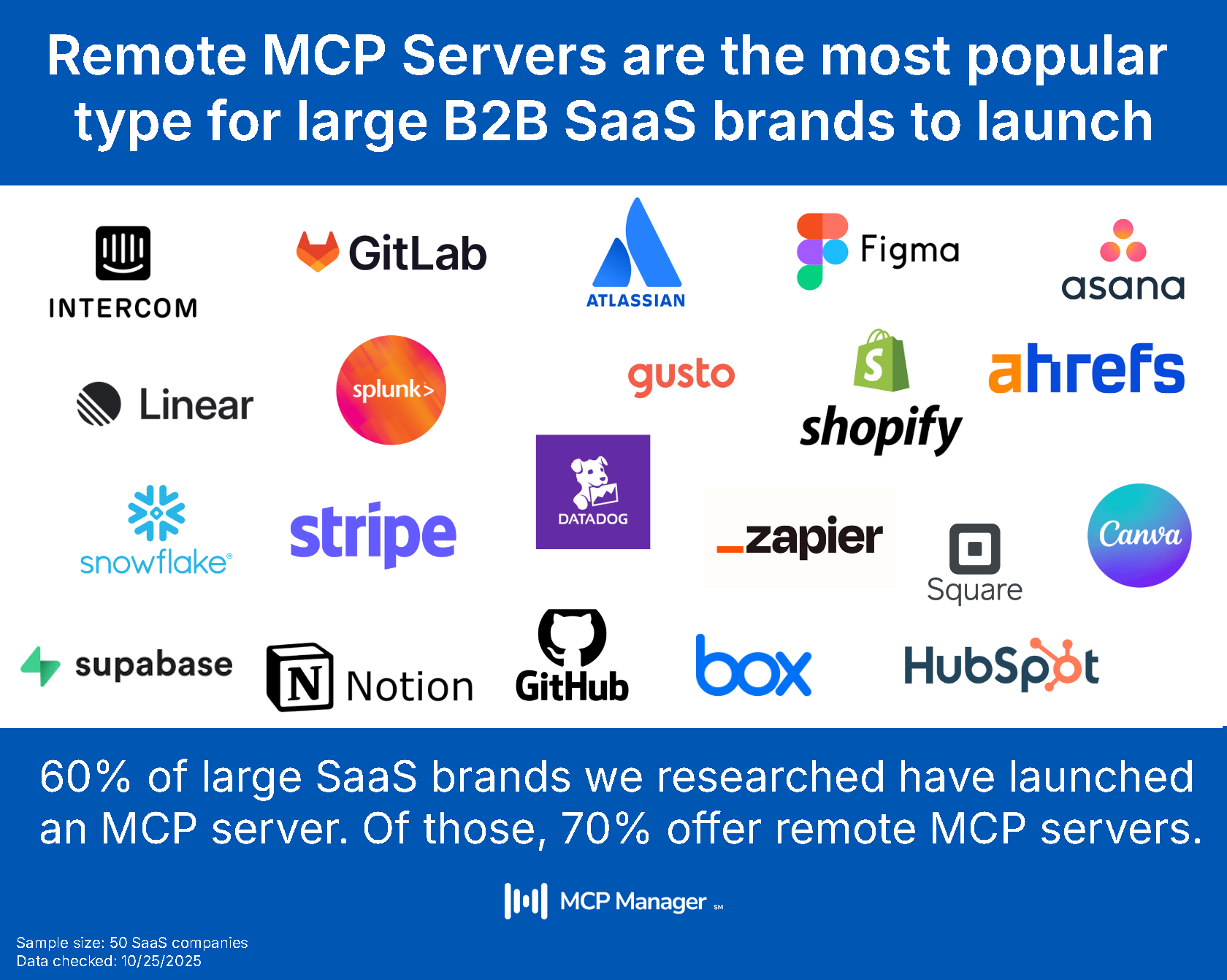
Remote MCP servers are the type you’ll typically see from large SaaS companies like Atlassian, Figma, and Asana. In fact, they’re the most popular MCP server deployment from these large companies.
Don’t Just Look At Overall MCP Servers Deployed
As of today (10/22/2025), the popular MCP registry, PulseMCP, has over 5,500 servers listed on it. However, this data is not a good proxy for overall MCP adoption. Instead, it’s more of an indicator that builders in the MCP ecosystem have been going to work.
It’s relatively easy for a hobbyist or casual developer to spin up a local MCP server, even if it doesn’t solve a real problem. Remote MCP servers, on the other hand, are harder to launch and maintain (but easier for end users), which is why larger organizations typically choose remote servers.
Deploying a remote MCP server takes more effort and confidence in customer demand than deploying a local one. As a result, the growth of remote MCP servers is a strong proxy for MCP’s overall value and a leading indicator of its broader adoption.
The Rise of Remote Servers Is a Leading Indicator for MCP’s Adoption
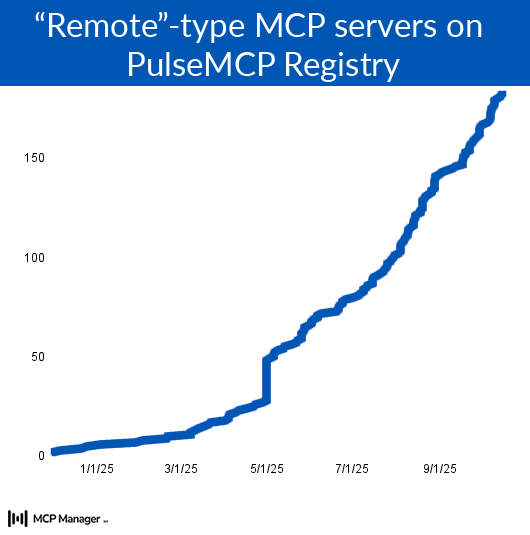
Since May of this year, remote MCP servers are up nearly 4x. These servers are not easy to deploy; large brands are investing resources in remote servers because customers want them.
It’s also worth noting that companies often start off deploying a local / workstation MCP server (because they’re easier to build), only later to update it to a remote server; Figma, for example, recently did this.
We can expect to see, of the large SaaS companies we surveyed, that more will launch remote MCP servers. Will these companies also release information about how many users utilize these servers? That remains to be seen. However, we do have a decent proxy of overall MCP adoption.
The 20 Most Popular MCP Servers
Again, I’ll reiterate that we simply do not know whether once an MCP server is downloaded if someone then connected it to an agent (and if the user provisioned access to the server to their team via an MCP gateway).
However, we do have some other statistics that show overall community use of popular MCP servers.
I analyzed the 20 most searched-for MCP servers in Ahrefs, which together generate 180,000+ monthly searches. Among them, 80% provide remote MCP servers — showing a strong preference for this deployment model. The takeaway: large companies are choosing remote MCP servers because they’re easier to deploy, scale, and maintain. That makes remote servers one of the best indicators of where MCP adoption is headed.
80% of the most searched for MCP servers offer a remote server deployment, highlighting the popularity of remote servers.
Most Sought-After MCP Servers:
| Server | Monthly Searches (Global) | Offers Remote Server? |
|---|---|---|
| Playwright MCP | 35,000 | ❌ |
| Figma MCP | 23,000 | ✅ |
| GitHub MCP | 17,000 | ✅ |
| Context7 | 13,000 | ✅ |
| Cursor MCP | 12,000 | ✅ |
| Supabase MCP | 11,000 | ✅ |
| Notion MCP | 9,500 | ✅ |
| n8n MCP | 9,200 | ❌ |
| Zapier MCP | 6,700 | ✅ |
| Jira MCP | 6,100 | ✅ |
| Sequential Thinking MCP | 5,300 | ❌ |
| Slack MCP | 4,700 | n/a |
| AWS MCP | 3,900 | ✅ |
| Puppeteer MCP | 3,700 | ❌ |
| Atlassian MCP | 3,700 | ✅ |
| Linear MCP | 3,400 | ✅ |
| GitLab MCP | 2,800 | ✅ |
| Stripe MCP | 1,900 | ✅ |
| Shopify MCP | 1,800 | ✅ |
| Snowflake MCP | 1,100 | ✅ |
Data collected 10/25/2025 via SEO tool, Ahrefs’ MCP Server
How to Increase MCP Adoption in 2026 & Beyond
Ultimately, remote MCP servers are the easiest type of server to deploy.
However, an MCP deployment strategy within an org typically uses a mix of all three types of server deployments. In addition, for non-technical teams, even utilizing a remote MCP server might be too technical. (Not to mention that MCP doesn’t offer much in terms of observability, AND there are emerging MCP security threats).
That’s where an MCP gateway (like MCP Manager) comes in.
MCP gateways not only make it easier for non-technical teams to get multiple MCP servers connected to agents, but they also offer observability, security features, and team provisioning features that the protocol doesn’t inherently offer.
MCP Manager offers enablement, observability, and security features that make MCP enterprise-ready.
Explore How an MCP Gateway Helps Deploy MCP Securely & Easily
Check out the demo below to see how easy it is to get started with MCP for your team. Tools like MCP Manager will help drive far more MCP adoption in 2026 and beyond.
For more news, guides, and how-to videos, subscribe to the MCP Digest, our free weekly update to help you adopt MCP servers securely, successfully, at scale in your organization.