MCP For Marketing: What MCP Unlocks For Marketing Teams




Model Context Protocol (MCP) servers are the bridge between AI and the apps and data your organization uses. Using agents and LLMs (like ChatGPT or Claude) with MCP servers offers marketing teams substantial efficiency gains and an unprecedented ability to interrogate all of their data from any angle, at any level, across all their systems.
IT teams and engineers are undoubtedly the pioneering users of MCP servers. However, non-technical business users, including marketing teams, will need to adopt MCP servers at scale to achieve the benefits of agentic AI that their key stakeholders expect.
This article provides marketers with the information they need to understand the benefits of MCP servers for marketing teams, the challenges of deploying and using them, and how organizations can deploy and use them successfully and securely at scale.
What is the Model Context Protocol (MCP)?
The Model Context Protocol is an open standard (akin to a common language and set of rules). It provides a standard way for AI models to connect to external data sources, tools, systems, and other resources, without the need for unique, specially built connectors for each connection.
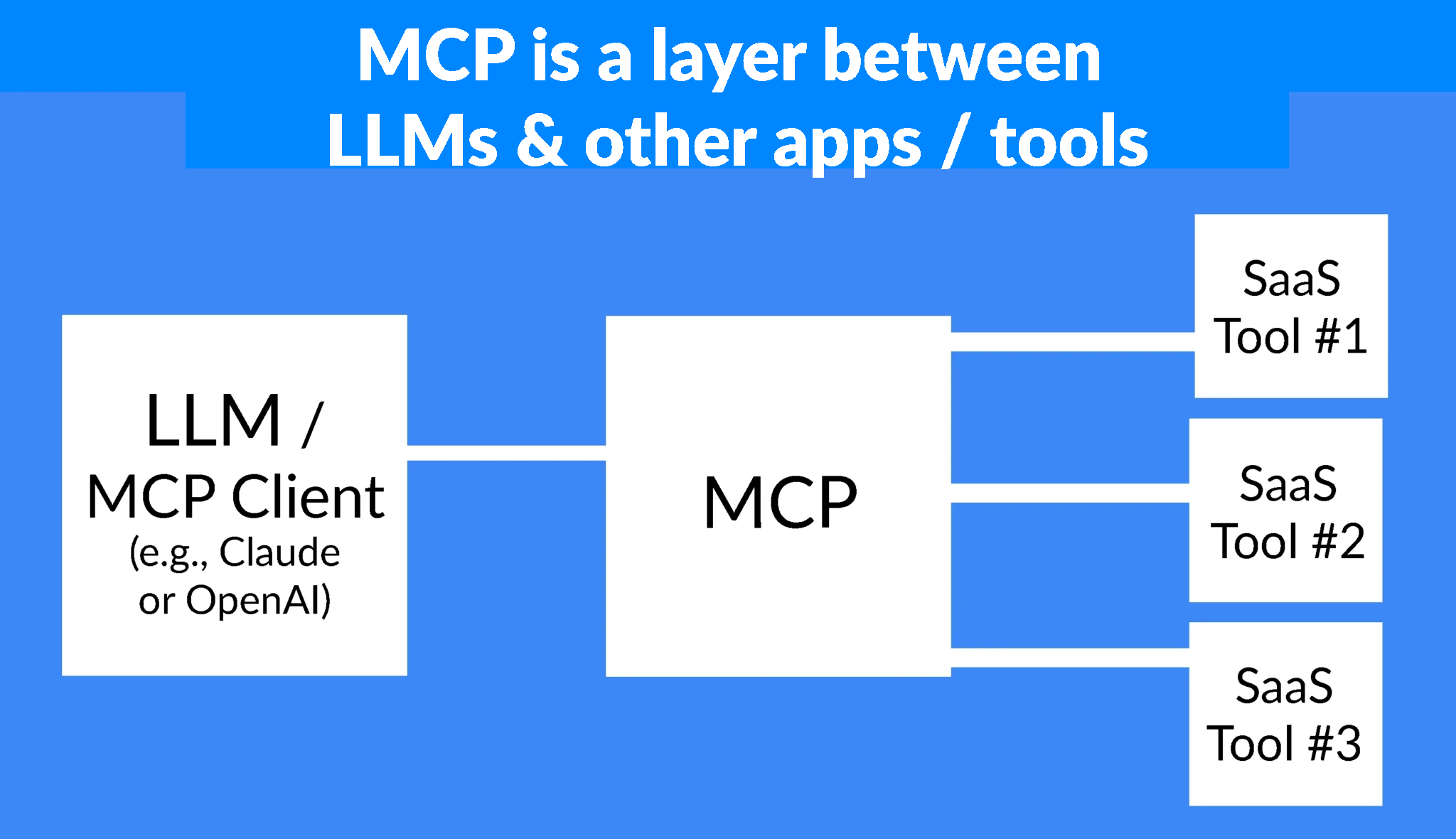
Rather than connecting directly to the resource, the AI model connects via an MCP server. The introduction of MCP makes connecting AI to external resources much easier, more scalable, and more reliable by using a universal client-server architecture.
What are MCP clients and MCP servers?
Before we get into the use cases for MCP, let’s go over some basic definictions.
An MCP client is a component embedded in an AI host. AI hosts come in many forms, but the most commonly used are chatbots such as ChatGPT or Claude.
The MCP client handles the MCP-based connection and communication between its AI host and the MCP server or servers to which it is connected. You can think of the MCP client as the intermediary or translator between the AI host and the MCP server.
At the other end of the connection is the MCP server. It provides a bridge between the MCP client and your apps, data, systems, and other resources.
Just like you wouldn’t allow a new employee to start without getting access to the tools they need to succeed (e.g., HubSpot, Ahrefs, WordPress), your agents and LLM need the context and capabilities these tools provide to do their job. MCP servers provide that.
The MCP server offers capabilities to the MCP client, including data sources and executable actions (called MCP tools) such as “send_email”, “create_task”, or “write_record”. These tools enable the AI host to interact with the resource to perform a range of valuable actions, including conducting data analysis and completing multi-step workflows.
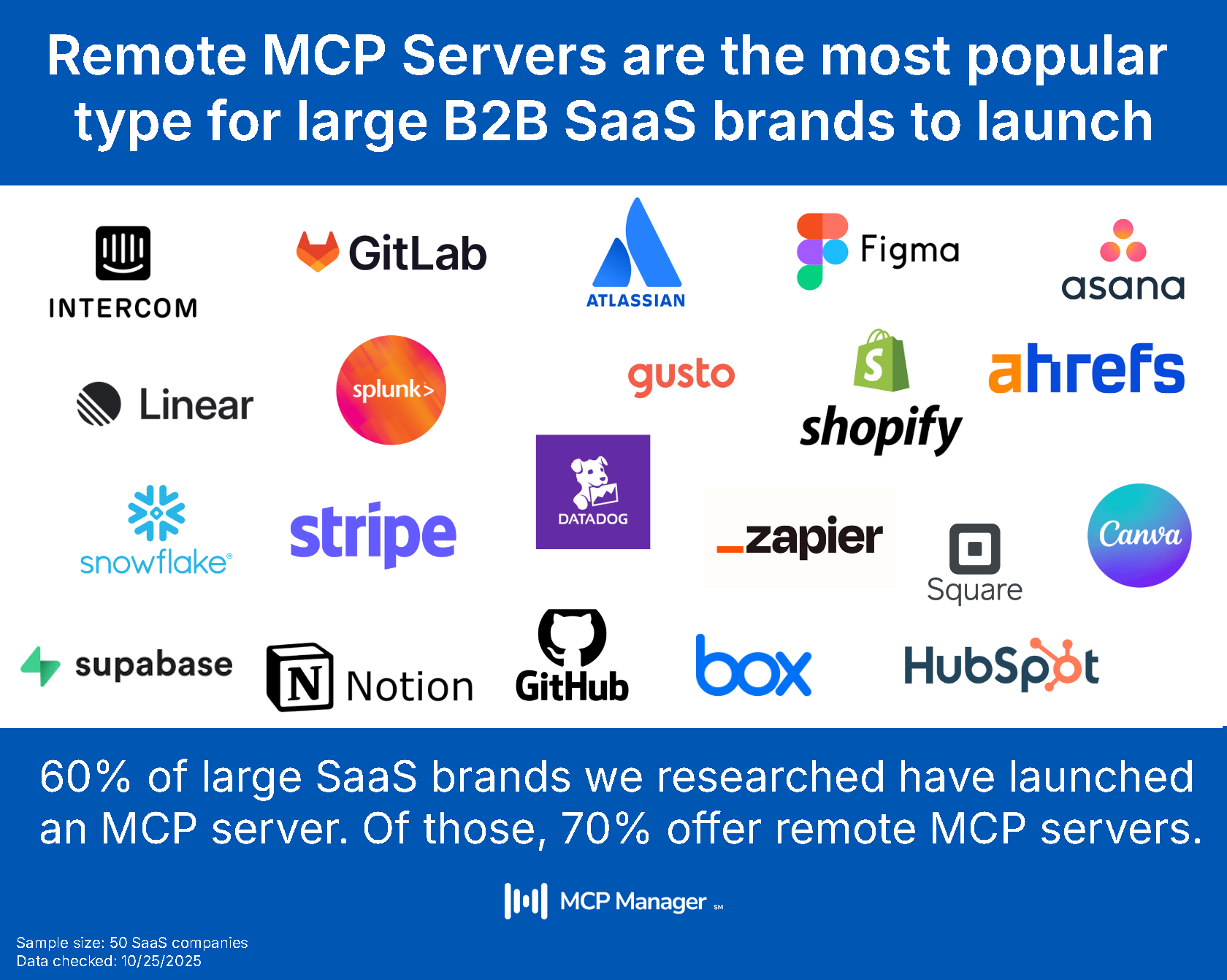
There are a few types of MCP server deployments; remote MCP servers are the easiest to implement. Major SaaS brands (many of which marketers use today) have published MCP servers; this allows customers to allow their LLMs to read and write data from tools like Ahrefs, Jira, HubSpot, and more.
How can marketing teams benefit from using MCP servers?
Becky Brooks, MCP Manager’s Head of Marketing, recently appeared on the Frontlines podcast to discuss how she uses MCP servers, and what marketers need to know about MCP right now. Listen to this to get a better idea of how MCP allows marketing teams to harness the power of AI.
MCP servers allow AI models to use your apps, data, and other resources, releasing them from their walled gardens, and empowering them to do genuinely valuable work for you and your team, including:
- Dynamic Process Automation: Automating complex and variable processes and workflows across multiple platforms
- Complex Multi-Source Analysis (Effortlessly): Conducting in-depth, multi-dimensional analysis using real-time data from multiple sources
- Improved Attribution Accuracy: Providing more accurate attribution for every lead
- Enhanced Personalization: Making micro-optimizations and personalizations at scale
Below, I explain each of these capabilities and their benefits for your marketing team in more detail.
Dynamic Process Automation
MCP servers connect AI agents to the tools they need to complete multi-step chained workflows, choosing the right steps and paths based on all available context. Take the burden of manual processes off your team and replace overly complex, brittle workflows and integrations with dynamic, context-dependent, flexible process automation.
Complex, Multi-Source Analysis (Effortlessly)
Another brilliant thing about MCP is that your AI agent can use multiple servers to access complementary data from different sources. For example, an agent can combine data from your CRM and your keyword research tool to draw insights into how search rankings are impacting leads from organic channels, providing you with comprehensive, connected insights you can use to assess and improve marketing performance and save hours of work.
Improved Attribution Accuracy
Imagine you had the time (and the patience!) to look through each lead’s engagement history across every data source to achieve a more reasonable channel attribution than relatively arbitrary attribution models. AI agents connected to MCP servers can do just this and address shortcomings in attribution models at scale, so that you can optimize resource allocation, marketing efficiency, and ROI.
Enhanced Personalization
Use agentic flows to target prospects with much greater precision than is possible with pre-built sequences and workflows. MCP servers connect AI agents to the tools they need to, for example, to micro-target and optimize communications, tailoring the themes, timing, and tone of each communication to specific users based on behavior and preferences.
Which marketing MCP servers are available now?
Here are just a few examples of popular marketing apps that have already launched MCP servers for their users:
CRMs/Marketing Automation:
- HubSpot
- Salesforce
- Pipedrive
Project Management
- Asana
- Linear
- Jira
- Monday.com
- Notion
SEO/Digital Analytics:
- Ahrefs
- Semrush
- Google Ads
- Google Analytics
eCommerce
- Shopify
- WooCommerce
- Amazon Marketplace
Example of Ahrefs promoting their MCP server:

Examples of MCP Marketing Use Cases
Here are some specific marketing use cases for AI models connected to MCP servers:
SEO Performance Insights & Recommendations: AI agents can use MCP servers, such as those offered by Ahrefs and Semrush, to provide performance insights and prioritized optimization opportunities. Your AI agent can then take these findings and connect to another MCP server (e.g. Monday.com’s MCP) to create a content optimization plan for you, complete with prioritized and scheduled tasks.
Keyword Research & Competitor Insights: AI agents can use MCP servers to connect to platforms such as Semrush and Ahrefs to gain insights into competitors’ SEO strategies, analyze multiple backlink profiles simultaneously, and conduct precision keyword research using layered criteria.
While writing our MCP Adoption Statistics post recently, we connected Ahrefs’ MCP server to Claude. Claude used their server to compile a report on the most popular and most searched-for MCP servers.
Cross-Platform Campaign Analysis: An AI agent can connect to Google Ads, Meta Ads, LinkedIn, and other paid search/paid social platforms via MCP servers to provide unified analysis of campaign performance across all platforms, and recognize cross-platform correlations and trends.
Data Quality Improvement: AI agents can identify gaps and inconsistencies across different sources and automatically clean and align data using the most reliable source for each datapoint.
Report Generation: AI agents can create polished reports, complete with detailed charts and executive summaries, using data from various systems, accessed via MCP servers.
Paid Campaign Monitoring: AI agents can automatically monitor PPC campaigns for anomalies and signs of poor performance, such as CPA exceeding set targets or strong performance that warrants further investment.
Email Marketing Performance Insights: Your AI agent can connect to the HubSpot MCP server (or equivalent) and provide insights and learnings, such as the common characteristics of your best-performing emails across all your workflows and campaigns.
Pipeline and Sales Insights: Using a CRM MCP server (such as the Hubspot MCP server), your AI agent can summarize and provide insights into specific deal types, for example, all deals in the “Negotiation” stage with a deal value over $10,000.
Agent Building for Improved Processes: If you’re using tools like OpenAI’s Agent Builder, you’ll want to empower them with the tools and context they need in the tools you use. We predict that marketers who grow comfortable building agents for their needs will be the most efficient.
What are the main challenges marketing teams face when adopting MCP servers?
MCP servers offer enormous productivity benefits for marketing teams, but they present several challenges for getting started and using them safely.
Here are the key challenges organizations face when using MCP servers.
- Training: Many marketers aren’t familiar with MCP and might feel intimidated about getting started
- Enablement: MCP servers are difficult to deploy and use at scale without an in-house specialist DevOps team or expensive AI consultants.
- Data Privacy Compliance: Giving AI open access to marketing/CRM systems that contain customer data can compromise data privacy and data protection regulations such as HIPAA, GDPR, and CCPA.
- IT Team Approval: MCP servers create opportunities for attacks on your organization’s systems and data. You’ll make sure you want to chat with your IT team about using them.
- Observability: MCP servers do not include built-in auditable logs, alerts, and reporting; this can cause security, IT, and data protection teams to put the brakes on MCP adoption.
- Costs Spiralling: MCP servers in their raw form are a notoriously greedy consumer of chargeable LLM tokens. Without MCP tool orchestration in place your costs can quickly spiral out of control.
Overcome These Challenges With An MCP Gateway
MCP gateways, such as MCP Manager, allow marketing teams to easily and securely adopt and use MCP servers at scale, without specialist expertise, and with costs controlled.
MCP Manager gives you a single, central point to provision, manage, secure, and observe all your team’s MCP servers. It sits between the AI agents and your MCP servers, enforcing the necessary guardrails to protect systems and data from attacks and unauthorized access, and ensuring that all data flows are secure, consented to, and compliant with regulations and policies.
How MCP “Apps” Will Change Marketing
In November 2025, the maintainers of MCP announced that MCP servers will soon be able to deliver interactive user interfaces directly to MCP hosts (such as Claude, ChatGPT, and other LLMs) via the MCP Apps Extension.
For marketers, this functionality will have a huge impact. It will allow people to complete their entire search, selection, and transaction flow within the same LLM chatbot UI, without ever visiting the company website.
While MCP is used today to improve internal workflows, that will evolve. Eventually, businesses will publish MCP servers that interface with customers. These external MCP servers will enable LLMs to access their websites, search for products and services, and complete purchases, bookings, and form submissions on behalf of customers.
Businesses that don’t facilitate these LLM-managed transactions will lose out to more adaptive competitors who recognize that AI is becoming the primary interface for businesses and their customers.
Which types of businesses will use MCP apps?
The most obvious application for MCP Apps is in e-commerce. Here, the LLM can take on the often laborious and frustrating task of identifying the products or services that best fit the customer’s specific requirements, thereby removing friction and improving the customer experience.
However, MCP Apps will have applications outside of e-commerce. They will make it easier and faster for customers to obtain quotes, schedule product demonstrations and appointments, track orders, and more.
MCP Apps Also Introduce Challenges For Businesses
Ensuring your business is compatible with MCP Apps and LLM-performed transactions also introduces uncertainties and challenges.
Firstly, businesses will incur a visibility and tracking gap. Withstanding region-specific cookie consent requirements, most website-based transactions have a high degree of user acquisition and behavior tracking.
Marketing teams can use these tracking data and insights to optimize their PPC campaigns, SEO, and user experience, and to offer personalized product recommendations.
It is technically possible to implement tracking, either on the server side or via MCP middleware.
However, as with website-based tracking, MCP-based interactions between businesses, customers, and their AI agents will also require consent management to comply with existing and potential future data regulations (such as GDPR). Consent requirements also apply to any personal data sent between the AI and the MCP server during a transaction.
MCP for Marketing – Getting Started
Our IT and engineering colleagues might have been the first to experience the MCP wow factor, but now it’s marketing’s turn.
Marketers are constantly running up against gaps in our reporting and analytics. We’ve spent years having to knit together complex automations, sequences, and segmentation, or having to settle with a level of targeting and personalization that doesn’t quite meet our aspirations.
Agentic AI, empowered by MCP servers, gives us the ability to leap over these barriers, giving us the capability to automate more, and treat each lead and contact as an individual – but at scale. Instead of simple if/then workflows, we can deploy AI agents that make data-informed, contextual decisions on when and how to communicate with each lead, to maximize engagement and conversion.
Deploying raw MCP at scale isn’t feasible. You do need tooling to package, provision, manage, and secure your MCP servers and their dataflows.
The good news for marketers is that MCP gateways such as MCP Manager allow you to deploy and use MCP servers easily and securely, without any special technical skills or know-how.
Using an MCP gateway like MCP Manager is the best way to start using MCP servers. It’s also the most robust, controlled, and secure method of scaling MCP usage across your team and organization.