The EU AI Act: What It Means for Enterprise AI Agents




The EU AI Act (Regulation (EU) 2024/1689) serves as the first complete legal framework created to regulate artificial intelligence. It applies to any business whose AI system output gets used inside the EU, no matter where that business has its headquarters. If your company uses AI agents that process EU customer data, make decisions that affect EU residents, or link to business software used by EU teams, this rule applies to you.
This article explains the risk categories, the enforcement schedule, who must follow the rules, and the immediate steps enterprise teams running AI agents need to take.
Quick Overview
- The EU AI Act divides AI systems into four risk tiers: unacceptable, high, limited, and minimal. Your specific requirements depend on where your software sits.
- The law officially took effect on August 1, 2024, with full enforcement rolling out in phases into 2028
- It covers providers, deployers, importers, and distributors of AI systems, which includes firms outside the EU if their AI output gets used inside the EU.
- Fines range from EUR 7.5 million (or 1% of total yearly global revenue) up to EUR 35 million (or 7% of total yearly global revenue.
- Companies should begin preparing for compliance now, particularly if they run AI agents that access customer records, CRMs, or main business tools at scale.
What the EU AI Act Actually Regulates
The EU AI Act sets up a risk-focused framework for AI systems that companies sell, set up, or use inside the European Union. It does not ban AI altogether. Instead, it groups AI tools by how much risk they pose to health, safety, and basic rights, and then assigns rules based on those groups.
The law defines an AI system as software that operates with some level of independence to process inputs and create outputs such as predictions, recommendations, choices, or content that can alter real-world or digital settings. This broad definition covers basic tools like a chatbot that summarizes help desk tickets all the way to an AI agent that modifies entries in your CRM.
Who Does the EU AI Act Apply To?
The law outlines six specific roles: providers, deployers, importers, distributors, product manufacturers, and authorized representatives.
Providers build an AI system or general-purpose AI (GPAI) model and launch it on the market under their own name or brand. Deployers are the businesses that actually use those AI systems. If your organization relies on a third-party AI agent to handle customer messages, you act as a deployer. Importers are EU-based businesses that bring non-EU AI software into the local market.
The key point for US-based organizations: the law targets providers and deployers located outside the EU whenever their AI system output gets used within the EU. For instance, a US-headquartered SaaS provider whose AI agents interact with EU clients must comply.
What Are the EU AI Act Risk Tiers?
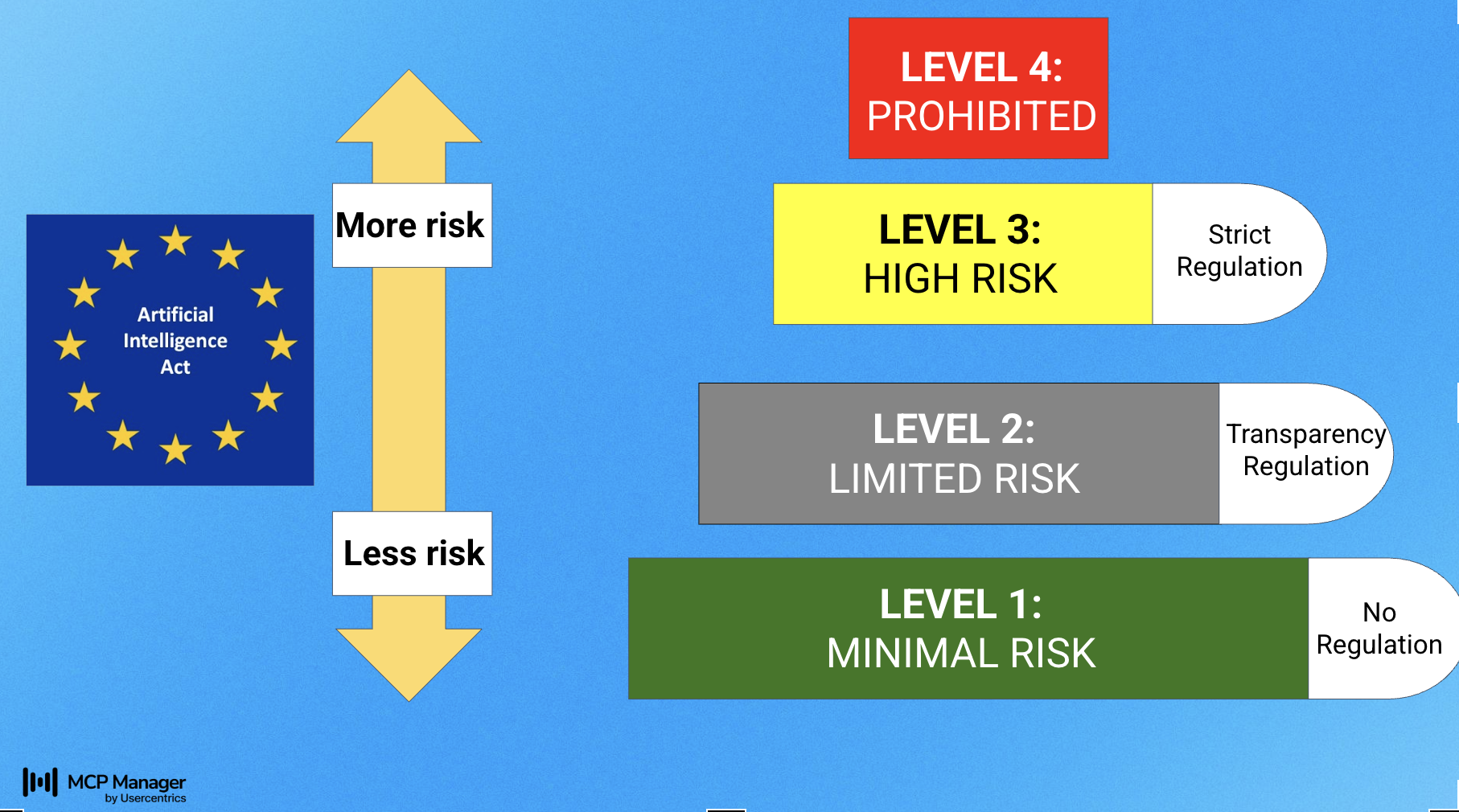
The law separates AI tools into four clear buckets. Your specific compliance duties, and whether you can legally run your tool at all, depend entirely on which bucket your software falls into.
Unacceptable Risk (Banned)
These specific AI uses are completely forbidden. The list includes deceptive AI tactics that cause harm, tools that take advantage of vulnerable groups (like children or individuals with disabilities), government-run social scoring programs, and systems that predict individual criminal behavior using profiling alone. If your software performs any of these functions, you cannot use it in the EU.
High Risk
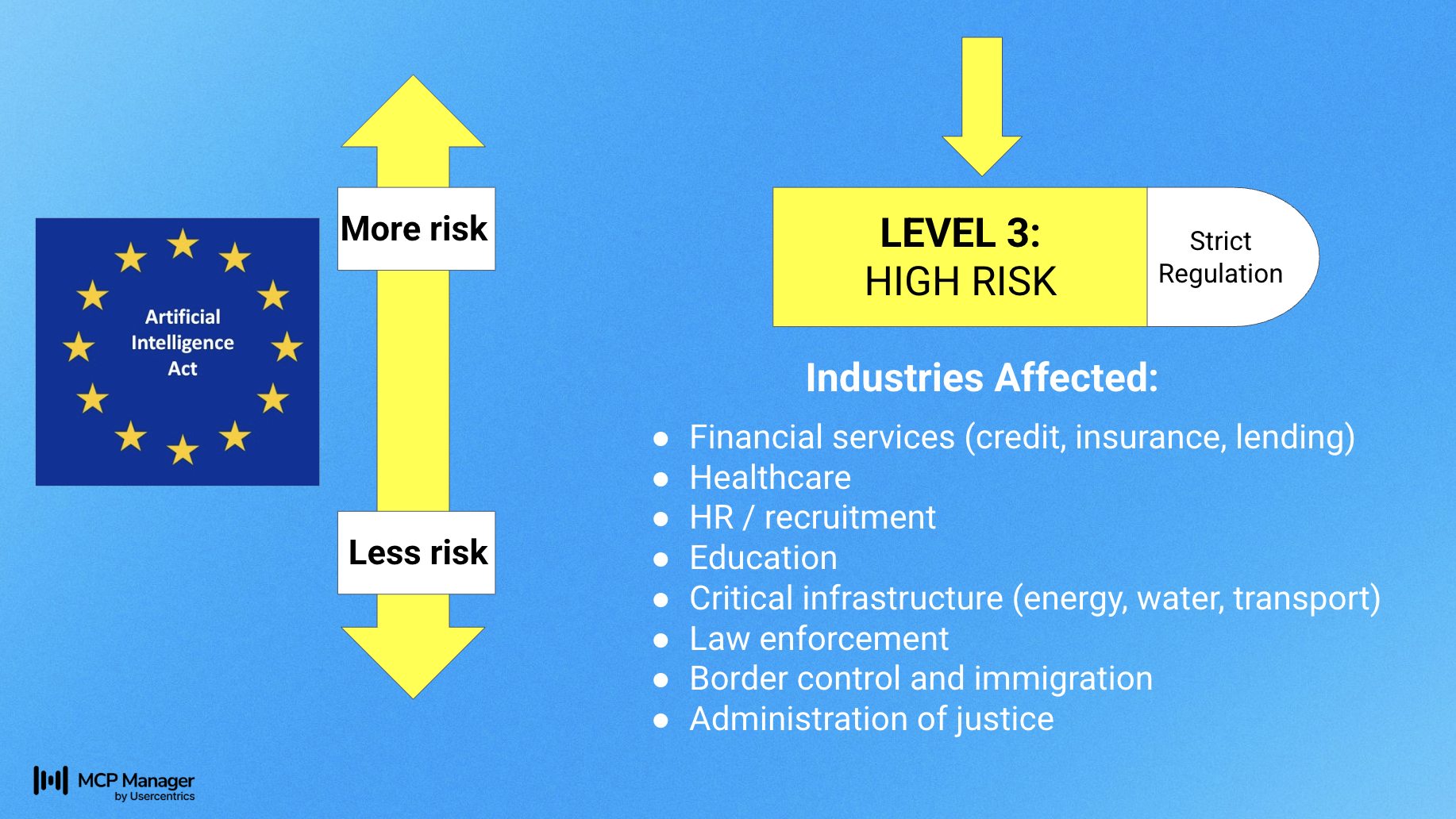
This area is where enterprise teams will spend most of their compliance efforts. High-risk setups include AI used in workplace settings (such as resume screeners that rate job applicants), loan approvals, schooling, critical infrastructure management, and policing. These tools must meet strict demands: formal conformity assessments, detailed technical documentation, human oversight features, and continuous monitoring.
If your AI agents interact with HR tools, financial records, or insurance processing systems, you need to check if they qualify as high-risk under this law.
Limited Risk
Tools in this bucket come with specific transparency demands. The primary obligation is open communication: businesses must inform users whenever they are actively interacting with an AI system. Common examples include customer service chatbots and AI-created content. While these requirements are lighter, regulators still enforce them strictly.
Minimal Risk
The vast majority of everyday AI tools fall into this group. Common examples include spam filters, AI search features, and recommendation systems. These tools face no tier-specific requirements, though the Act’s AI literacy duty still applies and the European Commission pushes companies to follow voluntary guidelines.
EU AI Act Timeline: What’s Already Enforceable
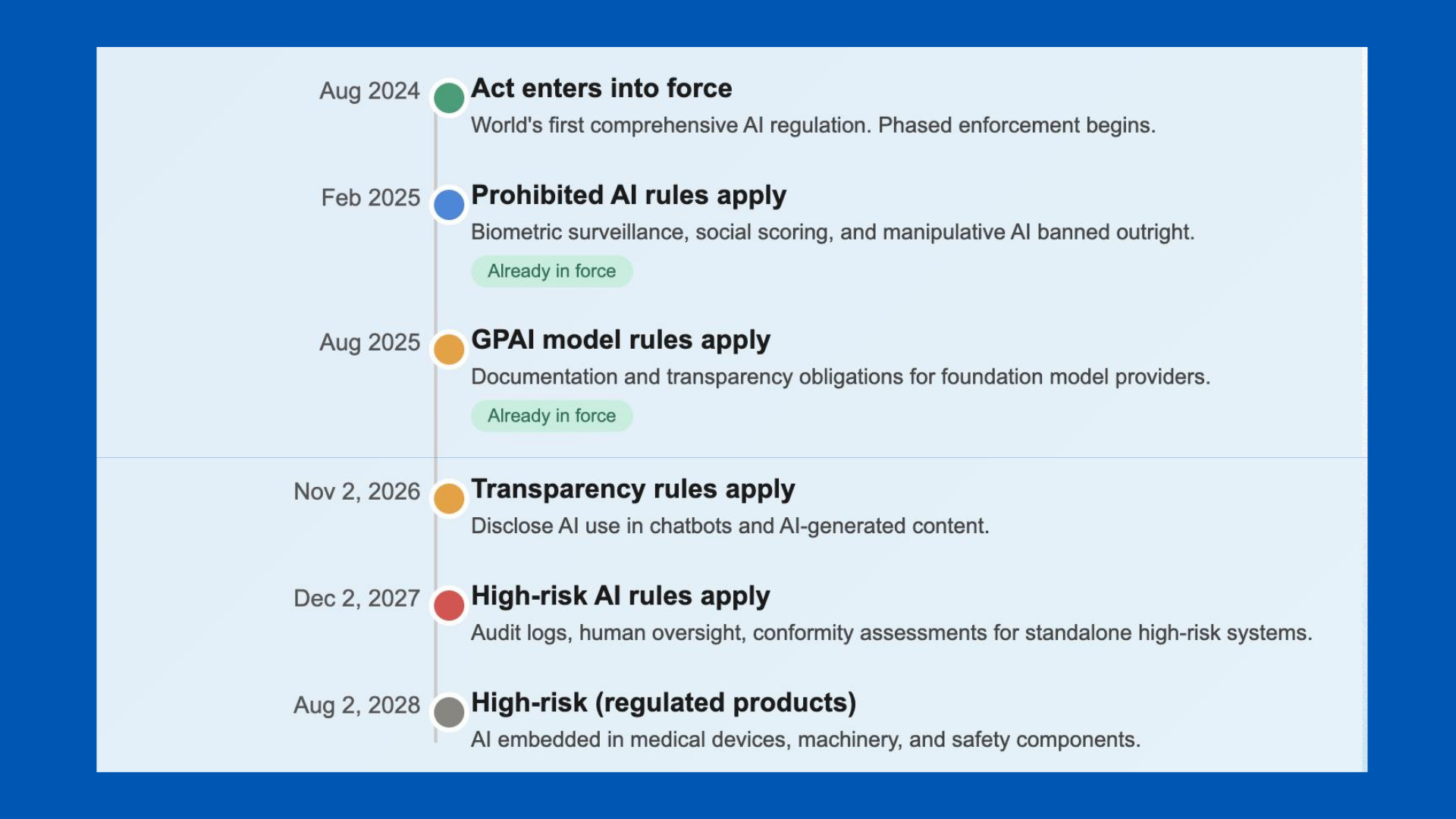
The regulation took effect on August 1, 2024. Authorities are rolling out enforcement in stages rather than all at once.
Banned AI practices (unacceptable risk) and rules around AI literacy are already active. Requirements for general-purpose AI models are also currently enforced. Transparency duties for limited-risk systems have applied since 2 August 2026. The Digital Omnibus (Regulation (EU) 2026/1744) moved the majority of rules for high-risk AI systems to 2 December 2027. Rules for high-risk AI built into regulated products follow on 2 August 2028.
The EU AI Office, the official organization in charge of managing GPAI rules, continues to grow its staff. You can track progress on the official EU AI Act website, and both an Advisory Forum and Scientific Panel are actively helping guide implementation.
In addition, the European Commission introduced the AI Pact. This voluntary program encourages providers and deployers to start following the rules early, long before compulsory deadlines arrive.
The main takeaway: if your company is taking a “wait and see” approach, your time to prepare is running out.
Does the EU AI Act Apply to AI Agents Using MCP?
Yes, provided those agents generate output used within the EU. The regulation is completely technology-neutral. It does not mention MCP, LangChain, or any other software protocol by name. Instead, it regulates what the AI system actually does, how risky it is, and the data it reads or modifies.
Practical Impact on Enterprise Systems
This creates practical steps for enterprise technology teams. AI agents linked to corporate software using MCP servers can view CRM entries, fetch financial logs, review HR files, and write updates back into main databases. When an agent reads EU customer details in Salesforce, passes them to a model, and returns a suggestion, it produces output that lands directly inside the scope of the Act.
Governance and Compliance Requirements
The law mandates clear visibility into what AI tools do, detailed activity logging, and direct human oversight for high-risk uses. If you cannot answer basic operational questions like “which agent accessed specific files, at what time, and what actions did it take,” you have a compliance gap.
Operationalizing Audit Logs and PII Filtering
This reality turns audit logging and PII filtering from optional tools into essential operational requirements. While the law does not order you to buy specific software, it demands that you prove complete control over your AI operations. For organizations running scale AI agents via MCP, that requires maintaining a central record covering every single tool call, data access request, and guardrail action.
If you want to learn more about how the EU AI Act affects MCP, you can check out the talk I gave at The Agentic AI Foundation’s 2026 MCP Dev Summit below.
How to Prepare for EU AI Act Compliance
Getting ready for compliance is an ongoing operating method, not a quick one-off job. Use these steps to get started.
1. Classify Your AI Systems by Risk Tier
Check every AI tool and internal agent across your company against the four risk categories. Pay extra attention to agents that interact with employment files, financial data, insurance records, or any workflow where the final outcome alters an EU resident’s rights or opportunities.
2. Build an Inventory
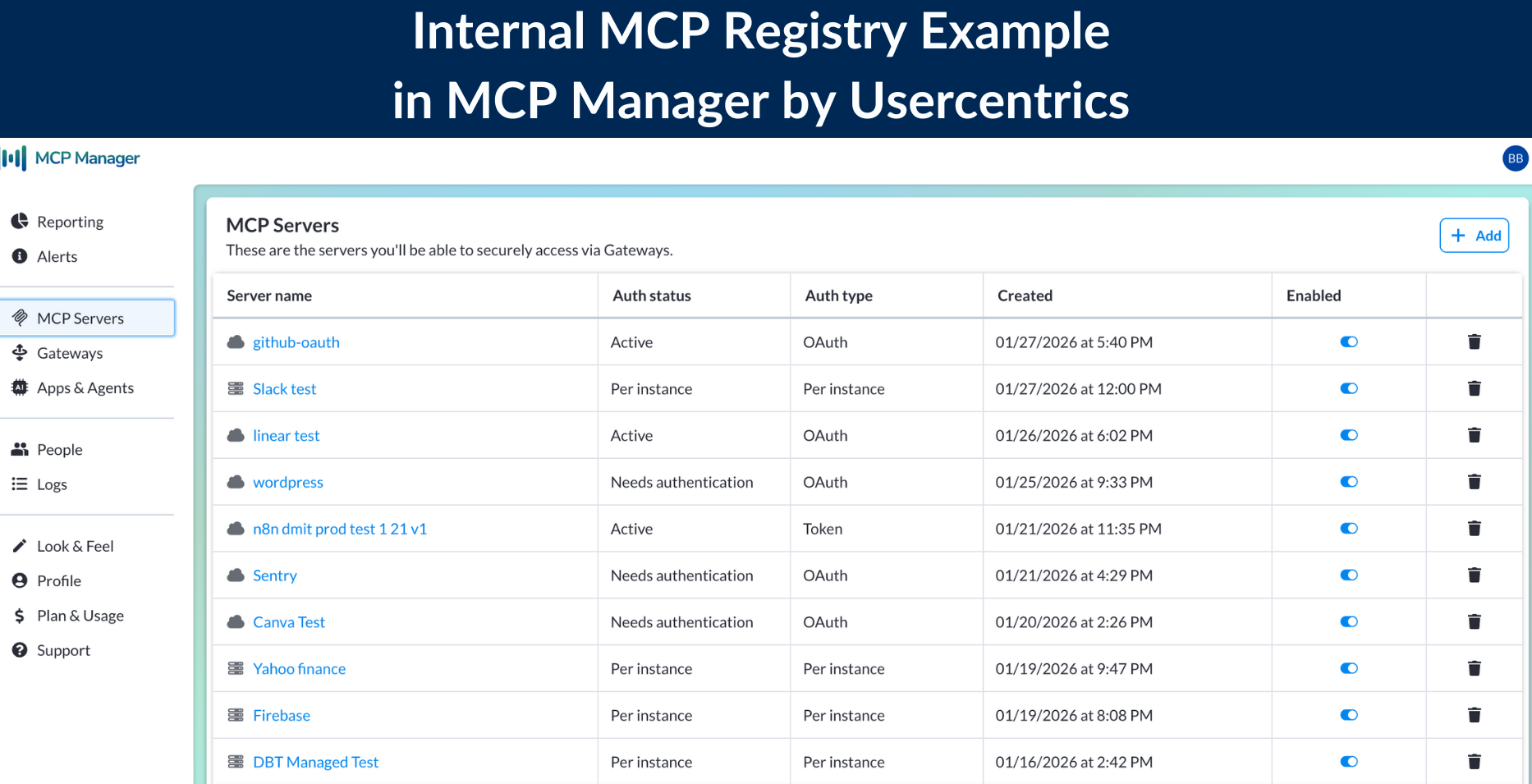
You cannot manage software you do not track. Build an exact registry listing every AI tool, MCP server link, active agent, and connected data store. Setting up a private MCP registry gives your team one clear source of truth for which servers are approved.
3. Implement Logging and Audit Trails
The Act requires high-risk AI systems to maintain detailed records so teams can track their history and actions. Built-in MCP logs are designed to help with software debugging, not legal compliance. You need detailed metadata, user-specific tracking, and the power to send logs directly to your SIEM for safe, long-term storage.
4. Enforce PII Controls
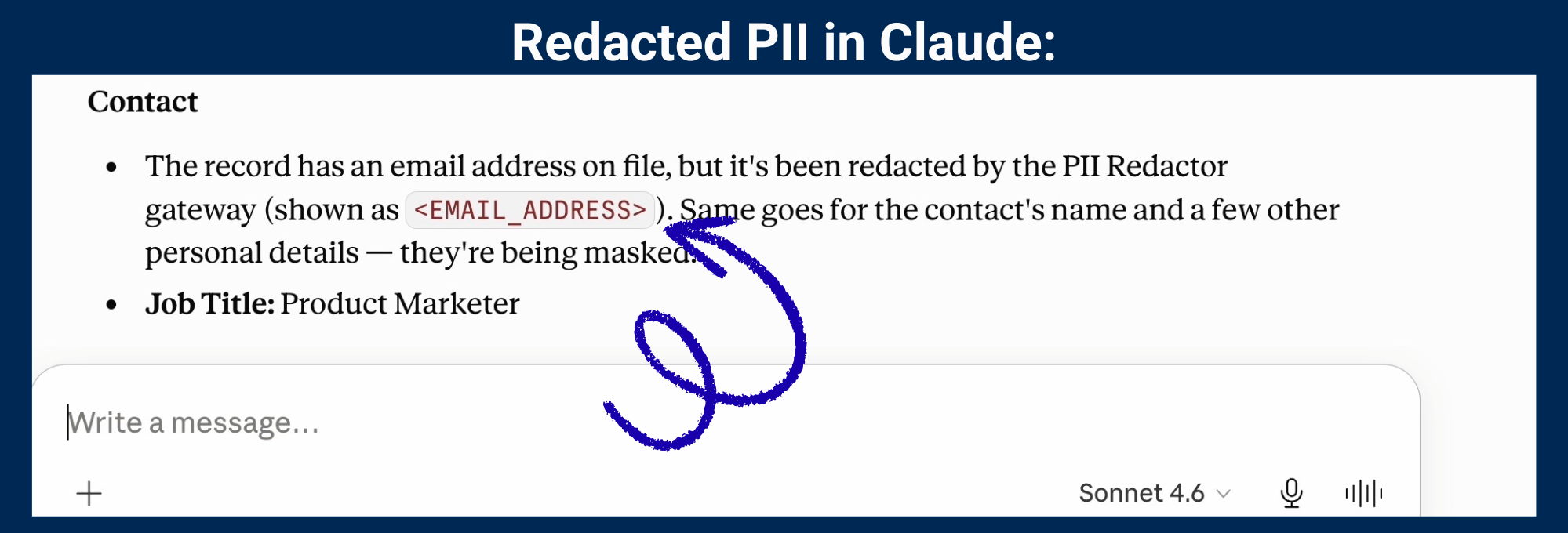
Sending EU personal data to an AI model creates long-term risks. Under GDPR, individuals have a right to erasure, meaning you must remove their personal data upon request. Once that data reaches the provider, it sits in their logs and conversation history on a deletion schedule you don’t control.
5. Establish Human Oversight
The Act mandates real human oversight for high-risk software. That does not mean having an employee manually approve every single output. Instead, it means giving staff the tools to step in, override outputs, or shut down an AI system if it moves outside its approved boundaries.
Related Terms and Comparisons
- EU AI Act vs. GDPR: GDPR focuses on protecting personal data processing. The EU AI Act covers AI systems as a whole, including tools that never touch personal data. They overlap whenever an AI system processes personal info belonging to EU residents, which happens in most business setups.
- EU AI Act vs. US AI regulation: The US lacks a single nationwide equivalent. American AI rules consist of a mix of executive orders, industry-specific directives (such as HIPAA), and individual state laws. The EU AI Act provides one unified framework backed by legally binding rules and clear fines.
- AI governance vs. AI compliance: Governance describes your day-to-day operational setup. Compliance is the final result. You put governance tools in place (like logs, access rules, filters, and system tracking) so you can prove compliance whenever an auditor or official checks your systems.
- GPAI obligations: General-purpose AI models, such as large language models, must meet their own set of rules under the Act, including making technical documentation and transparency records available. IIf you build tools on top of a GPAI model, you take on some of these duties as a downstream provider.
Is Your AI Infrastructure Ready for the Regulation?
The EU AI Act is an active reality today. Bans on prohibited practices are in force, GPAI obligations are active, and high-risk system rules start taking effect in December 2027. For businesses running AI agents linked to software via MCP, the areas you must manage are clear: data access, action logs, PII handling, user attribution, and human oversight all fall within scope.
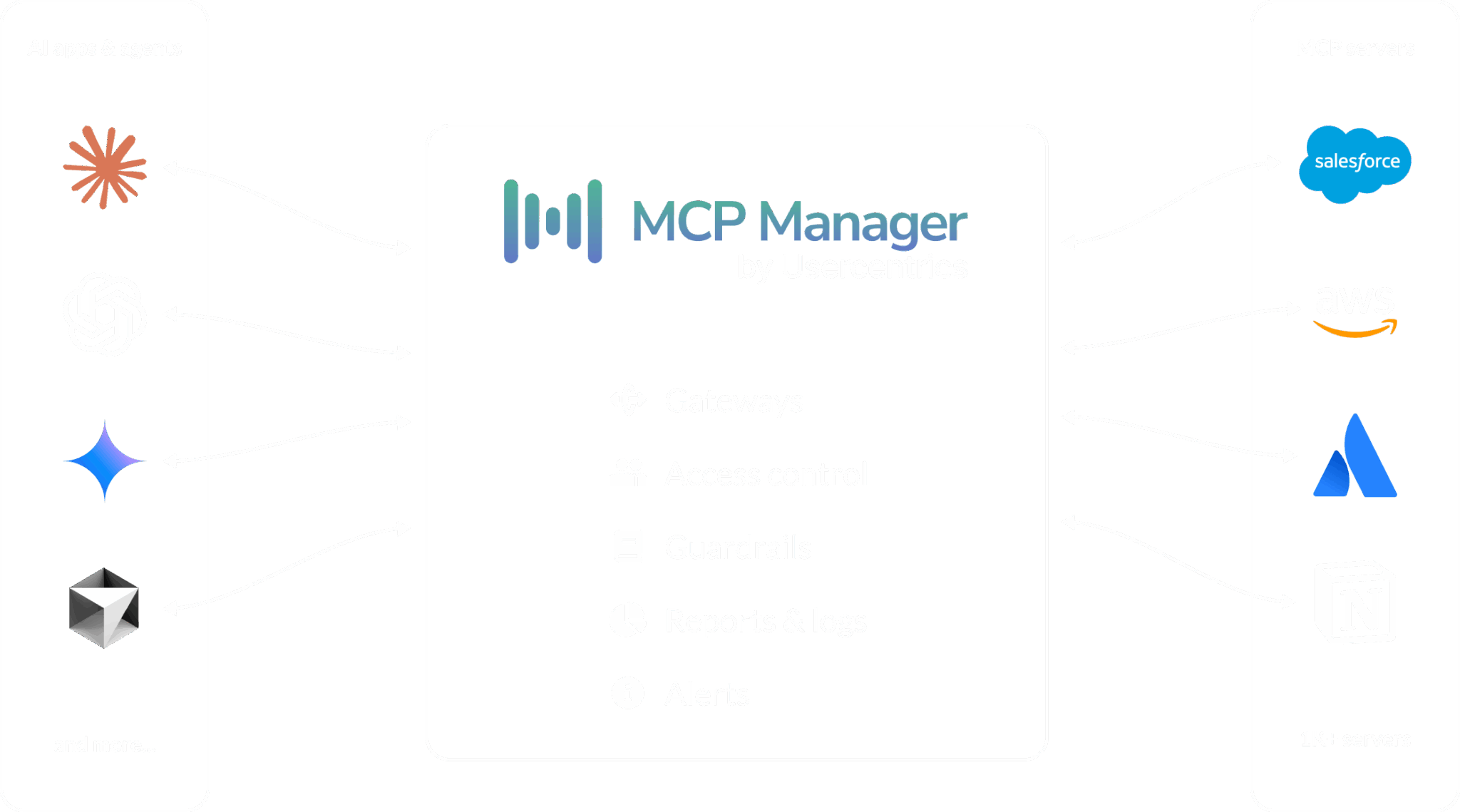
MCP Manager by Usercentrics offers the core MCP gateway infrastructure needed to handle these operations: unified audit logs, automated PII redaction before inputs hit the model, user-level identity tracking, and fine-grained access rules across every MCP server connection. If you are building your EU AI Act compliance strategy, start with the core infrastructure that makes governed AI possible.
FAQ
What is the EU AI Act?
The EU AI Act (Regulation (EU) 2024/1689) is the official framework regulating AI software across the European Union. It separates AI systems into distinct risk tiers and assigns rules ranging from complete bans to standard transparency steps.
Does the EU AI Act apply to companies outside the EU?
Yes. The law targets any provider or deployer whose AI outputs are used inside the EU, regardless of where the company is located. A US-based SaaS business serving EU users must follow the law.
What are the penalties for non-compliance with the EU AI Act?
Fines start EUR 7.5 million (or 1% of total yearly global revenue) and reach up to EUR 35 million or 7% of total yearly global revenue, depending on how serious the breach is.
When do EU AI Act requirements take effect?
Enforcement is happening in stages. Rules covering banned practices and AI literacy are live now, as are GPAI duties. Most requirements for high-risk AI software start on 2 December 2027, and rules for AI built into regulated products start on 2 August 2028.
How does the EU AI Act affect companies using AI agents with MCP?
AI agents connected to enterprise platforms via MCP fall under the law whenever their output reaches the EU. High-risk uses require detailed logs, clear user disclosures, active PII controls, and human oversight mechanisms. Utilizing an MCP gateway helps deliver the centralized oversight needed to satisfy these legal standards.
Want to learn more about how to make your MCP deployment compliant? Get a primer on MCP gateways below and then book a demo with us to see for yourself.