MCP For Regulated Industries – Your Complete Guide




Regulated industries might not seem like the most obvious early adopters of model context protocol (MCP) servers. MCP-based security risks to systems and data are even more of a concern for companies operating in regulated sectors, which face additional privacy and data security compliance requirements.
However, I’ve discovered that regulated industries, such as healthcare and finance, are already experimenting with and adopting MCP servers.
Organizations operating in these industries are not just heavily-regulated, but also process-heavy, with data-intensive day-to-day tasks, making them prime candidates to benefit from connecting AI models to resources – including internal and external systems and databases – via MCP servers.
In this blog, I’ll explain why organizations in certain regulated industries will benefit the most from MCP adoption, the challenges they will face when adopting MCP servers, and how to overcome them. I’ll also share real-world use cases for MCP servers in regulated industries, along with early research on their potential and impact.
Which regulated industries are best placed to benefit most from MCP?
I assess that the regulated industries that will benefit most from adopting the model context protocol (MCP) are those with many processes that are repetitive but not fully repeatable.
These are processes that organizations cannot fully automate using existing rule-based workflow automation, such as insurance claim verifications or prior authorization processes in healthcare. These processes require an individual assessment of multiple data points and information sources, which is too complex and context-dependent for rule-based automation.
Those industries that run on diverse, voluminous information drawn from a range of sources will also benefit the most from MCP adoption.
In my view, the highly-regulated industries that best fit these criteria are:
- Healthcare
- Pharmaceuticals
- Banking and finance
- Insurance
Why are AI models connected to MCP servers ideal in these sectors?
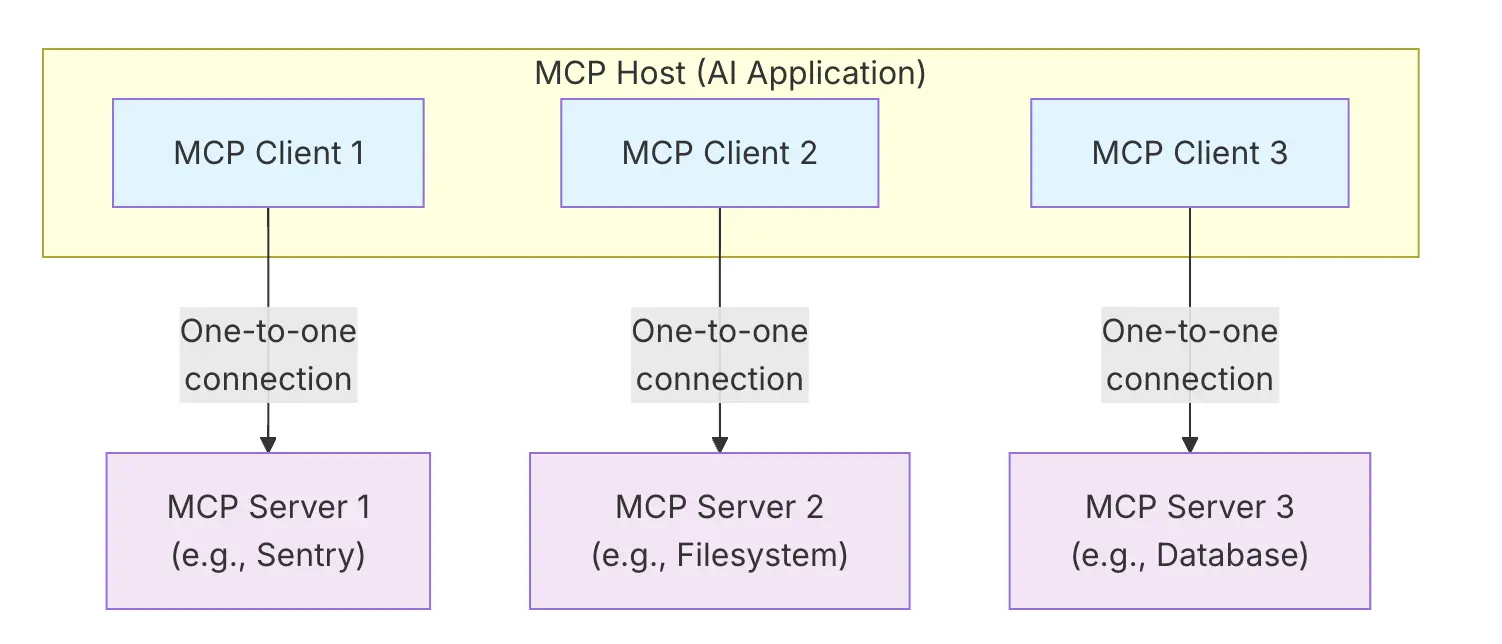
AI models connected to resources – such as apps, systems, and data – via MCP servers are particularly well suited to autonomously automate complex, context-dependent, multi-step processes – those processes that are repetitive but not fully repeatable.
They are also adept at turning real-time data from multiple sources into recommendations, insights, alerts, and other highly valuable outputs to support clinicians, underwriters, lawyers, traders, and other people working in regulated industries.
Considerations and Concerns For Regulated Industries
As the case studies in the sections below show, the opportunities to use MCP servers in regulated industries are compelling, offering benefits for organizations, their employees, and the people who use their services.
However, MCP servers in their “raw” form introduce a range of risks and flaws to data security and organizational systems, including a lack of MCP governance, central control, and observability, and accidental or negligent data damage.
Here are the primary risks for MCP servers in heavily regulated industries. You should be aware of these key concerns:
- Attacks: There are numerous MCP-based attack vectors and security risks. All of which can lead to data exfiltration or ransom, remote code execution, and complete system takeover, the consequences of which are especially severe in highly regulated industries.
- Regulatory Compliance & Data Protection: Organizations need to ensure that access to records by AI agents (including via MCP servers) is fully compliant with regulations (such as GDPR, HIPAA, GLBA, ALCOA++, etc.) that affect data security, privacy, and protection. This is a complex task requiring data mapping and categorization, robust audit logging, control over MCP-based data flows, and the capability to grant or block access based on criteria such as justifiable legal purpose.
- Auditability & Visibility: MCP communications create a layer of activity that sits outside existing network monitoring and logging infrastructure. This is unacceptable in regulated industries where end-to-end, comprehensive audit logs are essential for regulatory compliance. Centralizing MCP traffic through an MCP proxy with logging capabilities is a solution.
How Regulated Industries Should Adopt MCP
Regulated industries adopting MCP servers should take a compliance-first approach, which prioritizes:
- Security of business systems/data, and mitigation of MCP-based attack vectors
- Comprehensive, end-to-end audit trails (with compliance and consent-purpose specific metadata where required)
- Data sovereignty – ensuring that data is used and handled in accordance with the governance structures of the nation/region where it was collected, processed, and stored
- Safe usage training and policies for team members, with clear processes for requesting a connection to any MCP server
- Centralized control and observability over MCP servers, connections, and traffic
An MCP gateway provides the core capabilities that organizations in regulated industries need to adopt MCP servers at scale, securely, and in compliance with all relevant regulations.
Here’s a quick demo of an MCP gateway (MCP Manager):
MCP gateways, such as MCP Manager, enable organizations to:
- Adopt MCP servers easily, at scale, securely
- Control access to specific MCP servers and tools
- Mitigate MCP-based security risks
- Maintain a comprehensive registry of all MCP servers used
- Provision MCP servers to teams and individual users
- Enforce runtime security guardrails on all MCP traffic
- Manage, monitor, and control all dataflows to redact/block sensitive data
- Enforce consent-aware data access and usage where required (for example, to comply with GDPR)
- Generate fully-traceable, verbose audit logs
- Attain full observability over all MCP usage, with reporting and real-time alerts
- Improve AI agent efficiency; reducing operating costs and preventing “context bloat.”
In addition to using an MCP gateway, you should create robust policies and procedures to govern MCP server usage, and ensure that existing data protection, privacy, and security policies are updated to prepare for scaled agentic AI and MCP usage.
MCP gateways provide the technology to conduct these processes and exercise the required level of control over MCP usage and dataflows. However, you still need to decide what policies to enforce with your gateway to use MCP servers safely and in compliance with regulations.
You should also provide your teams with basic training to ensure they are prepared to use MCP servers securely and in compliance with relevant regulations.
MCP Use Cases For Regulated Industries
Many heavily regulated industries are also data-intensive and process-heavy. This creates a fertile and rewarding environment for MCP-based innovation.
MCP-based connections enable AI agents to deliver recommendations and responses to queries, based on a rich base of context and data from multiple connected resources (for example, electronic health records and medical resource databases).
Access to systems via MCP servers also allows AI agents to automate those processes – common in industries that are process and regulation-heavy – which are repetitive, but still sufficiently unique to make simple if/then (or n8n) workflows an inadequate option for automation.
Below, I’ve highlighted illustrative use cases of MCP across regulated industries, using healthcare and pharmaceuticals, finance and banking, and insurance as example sectors.
Remember that despite how revelatory these use cases may seem, they are still only the tip of the iceberg of what MCP enables AI models to do for organizations and the people they serve.
Healthcare & Pharmaceuticals
Here are some of the ways that healthcare providers and pharmaceutical companies can utilize AI agents connected to MCP servers:
Healthcare:
- Automating benefits investigations and prior authorizations
- Providing insights and query responses directly from EHRs and other records
- Enabling ambient listening to take information from verbal patient-clinician discussions, combining this with existing patient context (such as EHR data), and formulating insights, recommendations, and action items for the clinician
- Automating and improving scheduling for appointments and procedures
- Assisting with chronic disease management with predictive modelling, flagging early warning signs, and coordinating care
- Operating patient triage and care navigation processes
Pharmaceuticals:
- Monitoring and optimizing supply chains
- Automation of clinical trial design, recruitment, patient selection, enrollment, adaptive protocol adjustments, and real-time trial monitoring
- Claims data analysis and insights
- Salesforce analysis and insights
- Integrated AI-generated insights using MCP-based connections with CRM data, scientific resources, and compliance systems to enhance provider interactions.
- Real-time monitoring of the regulatory environment
- Automated product safety and surveillance, including detection, aggregation, and reporting of safety signals using data from global health systems and electronic records
Below are some real-world examples of how healthcare and pharmaceutical organizations are already experimenting with or using MCP servers.
AI Agents Connected To/Embedded in EMR/EHRs
MCP servers can connect AI models to both structured and unstructured data in EMRs/EHRs. This opens up a range of use cases, from speeding up complex workflows, such as prior authorization, to giving the LLM the context it needs to provide answers, insights, and recommendations to clinicians and other parties involved in care provision.
At the time of writing, I am still waiting to see first-party MCP servers from EHR/EMR vendors themselves. However, numerous third-party, open source offerings are already available. For example, Agentcare AI and TheMomentumAI have each already launched MCP servers that connect to popular FHIR-based EHR and EMR systems.
TheMomentumAI’s EHR-MCP Demo:
Bigger names are also getting involved. John Mandel, chief architect for health at Microsoft Research, has written several articles about the use cases for MCP in healthcare, including:
- Managing clinical workflows
- Responding to clinicians’ queries using information from multiple internal and external data sources
- Summarizing patient histories
- Providing context-aware insights and recommendations to clinicians
Josh has also explored how AI agents connected to various MCP servers – including EHR-MCPs – can take on the dreaded burden of prior authorization workflows – a use case that is getting clinicians and other health-tech leaders very excited.
Here’s a video demo of Josh Mandel’s experimental Epic EHR-MCP:
Academic research also supports the efficacy of EHR-MCPs. A study of clinical information retrieval using LLMs connected to an EHR-MCP server, from Keio University Hospital in Tokyo, demonstrated that “LLMs can effectively use MCP-based tools integrated with an EHR to autonomously retrieve clinically relevant information for infectious disease management.”
Another study from Northeastern University and Kent State University demonstrated that LLMs connected to EHRs via MCP servers can “generate concise and interpretable clinical insights,” which “represents a significant step toward more intelligent, interactive, and patient-centered clinical decision support systems.”
Diagram of MCP-EHR connection taken from:
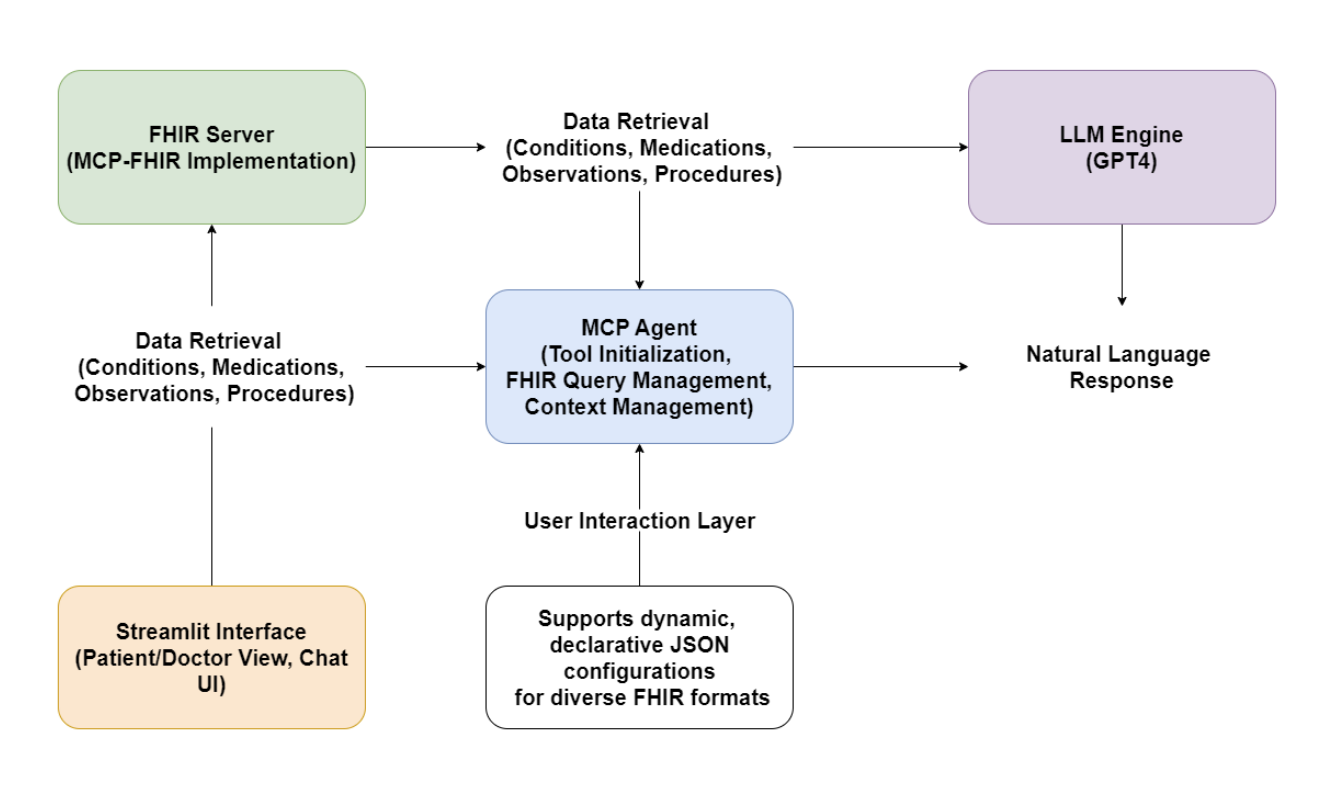
The work here on EHR connectivity via MCP servers is still relatively raw and at an early stage. As Josh Mandel points out, early adopters and vendors will need to navigate regulatory, security, and safeguarding challenges before using these solutions at scale. Still, the groundwork for EHR/EMR MCPs is in place, and the pace of progression indicates to me that adoption will begin earnestly in early 2026.
First Data Bank’s MCP Server
In October 2025, First Data Bank, the leading provider of drug and medical device databases, announced that it was making its new MCP server available for pilots. The server included tools that:
- Enhance workflow efficiency: Automating tasks such as staging prescriptions for physician approval within electronic health records (EHRs) based on free-text clinical notes.
- Enable ambient listening: Delivering real-time, context-aware medication insights during clinician–patient conversations, proactively informing provider decisions in the moment instead of reacting to manual actions taken within the EMR. A recent episode of the This Week Health podcast described a similar use case for ambient listening to improve the efficiency and efficacy of patient referrals:
- Ongoing innovation: Providing faster, easier support for an expanding ecosystem of AI-assisted workflows across healthcare platforms as FDB extends its MCP tools and capabilities over time. Examples include pre-processing pharmacy order verification, assembling an accurate list of a patient’s current medications, and simplifying medication reconciliation.
BioMCP Server
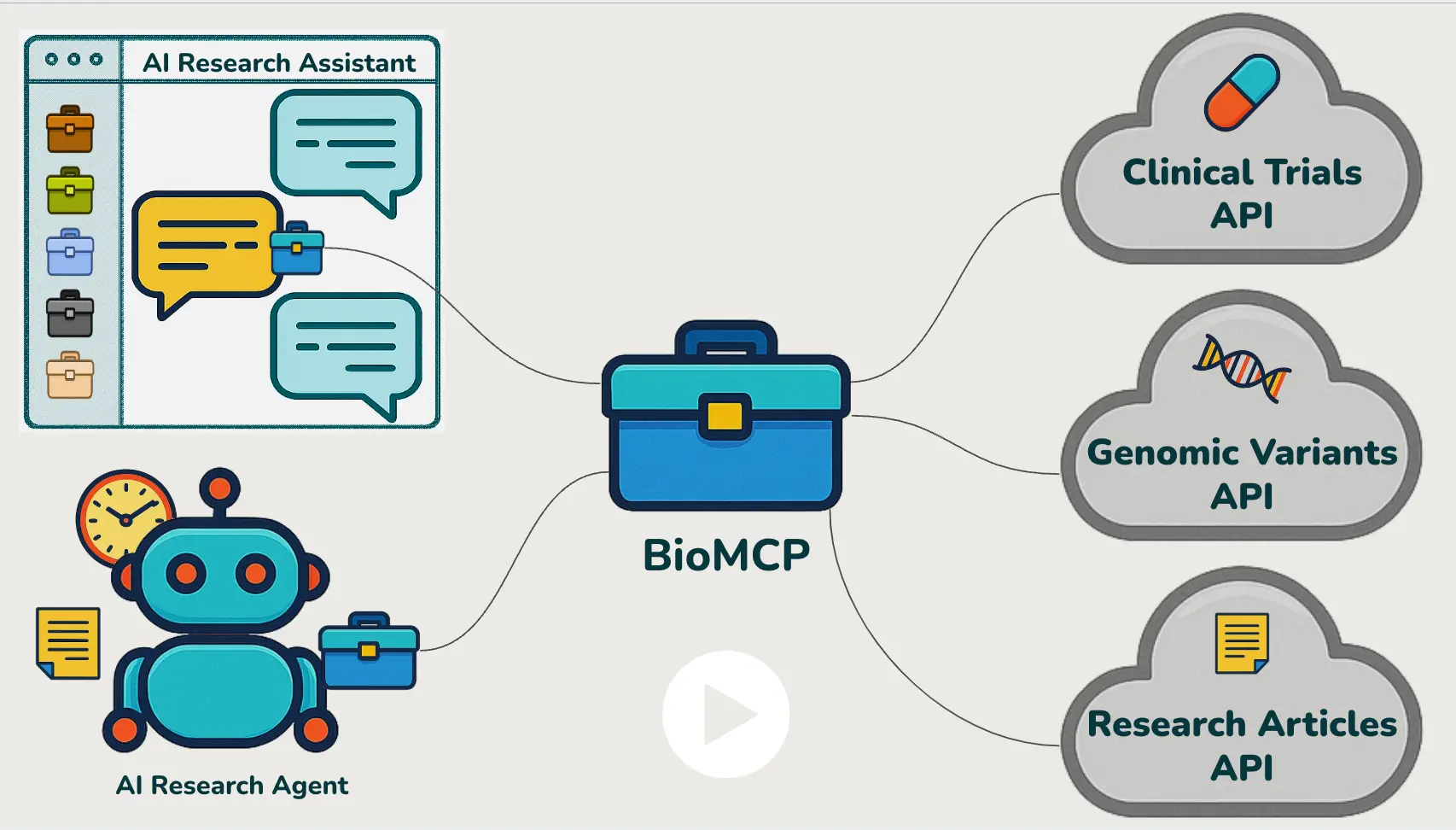
BioMCP is an open source project that connects AI models and researchers to critical biomedical databases through natural language and conversational querying. Here are some tasks you can use it for:
- Searching research literature, for example, for studies on specific genes, variants, diseases, drugs, and combinations of all these criteria
- Finding clinical trials for specific conditions, in certain locations
- Analyze genetic variants, predict their effects, and understand their clinical significance
BioMCP aims to radically reduce the amount of time that researchers and clinicians spend wrestling with complex databases and their interfaces, and to make biomedical data and information more accessible.
Finance/Banking
Here are some use cases for MCP servers in banking and finance that are either already active or proposed:
- Combining market data feeds, internal databases, and proprietary models to produce improved, real-time analytics for traders
- Trading execution, portfolio rebalancing, and quote analysis
- Personal finance agents that use information from a range of sources in addition to bank-held transaction data to provide personalized assistance to customers
- Devising, building, and testing financial products and instruments
- Dynamic client risk profiling
- ETF composition tracking, summarization, and simulation of rebalancing logic
- Automated collateral and property risk analysis
- M&A modelling and insights using market data combined with internal research and other sources
- Improved fraud detection and prevention using AI/ML connected to MCP servers, to replace less effective rule-based systems
- Improved customer service, with AI-powered, MCP-connected personal financial assistants and advisors
More case studies for MCP were explored at the recent MCP Dev Summit, in their roundtable: Why Financial Services Companies are Investing in MCP:
Below are some real-world examples of how organizations are already using MCP servers in finance and banking.
Real-Time Market Analytics
Instead of stitching together feeds, APIs, spreadsheet data, and other information sources, trading teams can pull live market data, pricing analytics, and curve calculations using AI agents connected to MCP servers.
Moodys, the London Stock Exchange Group (LSEG), Yahoo Finance, Alpha Vantage, Alpaca, Octagon AI, and a range of other market intelligence providers have already made their MCP servers available. Highlighted use cases include:
- Providing answers to precise queries instantly (e.g., “Get me Nvidia’s income statement, then compare net income year over year,” or “Show me Apple’s revenue trend for the last 5 years.”)
- AI-powered trading assistants, providing buy/hold/sell advice using logic based on predefined indicators or thresholds, and making orders if desired
- Simulations of potential trades and positions, including projections and scenario modelling, with visualizations and recommendations
- Risk profiling
- Portfolio monitoring with context-aware alerts and insights
Here’s a quick overview of LSEG’s Analytics MCP server:
Business Banking MCPs
Grasshopper Bank is innovating at the customer-facing end. They’ve launched an MCP server that delivers financial analysis and insights to their business clients. The server provides AI models with access to structured data, including transaction histories, KPIs, and cash flows.
MCP-based connectivity enables AI to:
- Quickly provide accurate answers to queries such as “How much did my business spend on software and marketing last month, and how does that compare to revenue?”, and follow-up queries such as “What expenses could I reduce to improve margins next quarter?”
- Send context-aware alerts that are far smarter than predefined rule-based alerts. For example, “considering upcoming payroll and invoice collection trends, you are projected to be short by $22,000 in 9 days.”
- Categorize transactions dynamically using predictive modelling that incorporates an understanding of the customer’s specific spending patterns over time
- Make context-based recommendations (e.g., “delay invoice payment to Vendor X by 3 days to avoid liquidity risk”)
Insurance companies
Here are some of the ways MCP servers are already used by insurance carriers, or use cases that are planned or proposed by technologists and thought leaders in the sector:
- Automating insurance product development
- Autonomous policy binding decisions – with predetermined parameters
- Policy management and verification
- Claims automation, including analysis of claims documents and automated approval or escalation of claims
- Automated risk assessment to improve underwriting efficiency
- Efficient personalized pricing, using data from claims history, driving records, usage, and a range of other factors to quickly generate individualized policy pricing
- Fraud detection and prevention using sophisticated, context-aware analysis of claims instead of simpler systems based on predefined rules and decision trees
Socotra MCP
Some of the world’s leading insurers, such as Axa, IAG, and Symetra, use Socotra to manage their insurance products, policies, and users.
In October 2025, Socotra launched its first MCP server, allowing Socotra users to connect AI models to the Socotra platform. The Socotra MCP allows organizations to automate a range of workflows and quickly get responses to complex, multi-step queries.
Here are some example prompts Socotra has provided to illustrate the mix of information gathering and task automation that is possible with their MCP server:
“Analyze this policy’s transaction history and current coverage terms. Identify any compliance issues, coverage redundancies, underwriting concerns, or premium calculation discrepancies. Prioritize these issues by severity and business impact, then suggest transactions to address the most critical problems.”
“Based on your analysis, determine what type of transaction would be most appropriate for this policy (endorsement, renewal, cancellation, etc.) and explain your reasoning. Then create the transaction with an effective date that makes business sense given the policy’s current state.”
EMC Insurance
EMC Insurance, a national business insurance carrier, began using MCP servers to assist with a large data migration project.
However, they soon found other, day-to-day applications for MCP servers, including automating claims processing, semantic model analysis, and data lineage pro.
Sure MCP
Sure provides a comprehensive insurance management platform for insurance carriers and brands. In June 2025, they launched an MCP server to enable AI agents to handle the entire insurance lifecycle autonomously.
Some of the capabilities Sure’s MCP server provides include:
- Instant Policy Quoting: AI agents can generate accurate insurance quotes in real-time based on customer requirements
- Autonomous Binding: AI agents can execute policy binding decisions within predetermined parameters
- Seamless Policy Management: Full lifecycle policy administration through AI agent interfaces
- Integrated Claims Processing: AI-agent powered claims initiation and status updates
- Regulatory Compliance: Built-in compliance guardrails ensure all AI actions meet regulatory requirements
- Multi-Carrier Access: A single interface provides access to Sure’s entire carrier network
MCP and Regulated Industries – Perfect Partners?
My somewhat controversial take is that some of the most heavily-regulated industries will pioneer scaled MCP adoption. My research into sectors such as healthcare, pharmaceuticals, insurance, and banking has revealed that these sectors all have many labor-intensive processes that are repetitive but not fully repeatable.
These are processes, such as prior authorization in healthcare or claims validation in insurance, that are too context-dependent and unique to reliably automate with predefined rule-based workflows. Instead, they create burdensome work for teams, and sometimes even require specific staff to carry them out.
AI agents, connected to a mix of internal and external systems and data via MCP servers, are ideal to automate these types of processes.
Despite the necessary work to make MCP suitably secure and compliant with regulatory requirements, the benefits for organizations, team members, and their customers or end-users will drive these organizations to adopt MCP, perhaps even ahead of industries without the same regulatory considerations.