AI Security Posture Management (AI-SPM) Explained




I security posture management (AI-SPM) is a security domain centered on finding, categorizing, and fixing risks tied directly to AI models, training data, ML pipelines, and AI services operating in your cloud environment. If your company is rolling out AI workloads without ongoing visibility into what is running, what data it accesses, and who holds permissions to it, AI-SPM is the approach that closes that gap.
Quick Overview
- AI-SPM finds and inventories AI models, datasets, pipelines, and services in your cloud environment, including unauthorized shadow AI deployments.
- It surfaces AI-specific exposures that traditional CSPM and DSPM miss: training data pulled from ungoverned sources, model weights sitting in publicly reachable storage, over-permissioned service accounts, and misconfigured AI APIs.
- AI-SPM constantly monitors your AI attack surface and applies security policies from early training through runtime.
- This discipline is vital right now because AI adoption has moved faster than security tooling in most companies, creating blind spots that expand with every new model deployment.
- AI-SPM overlaps with but stays distinct from CSPM (infrastructure posture) and DSPM (data posture); it protects the AI-specific layer sitting on top of both.
Why AI-SPM Exists
Security teams created their tools around infrastructure and data. AI workloads do not fit neatly into either box.
A cloud security posture management (CSPM) tool flags a misconfigured S3 bucket. A data security posture management (DSPM) tool finds sensitive data stored in the wrong place. Neither tool will warn you that a self-hosted model is drawing training data from a production database, or that an engineer deployed a new AI service last Tuesday using a service account with read access to your entire data warehouse.
AI brings a fresh category of assets: models, weights, training datasets, inference endpoints, vector databases, embedding stores, and agent-to-tool connections. Each asset introduces risk that tools built for VMs, containers, and object storage cannot see. AI-SPM exists because the AI attack surface is structurally distinct from the cloud attack surface, even though it operates on top of it.
What AI-SPM Actually Covers
AI-SPM spans discovery, classification, risk assessment, and policy enforcement across the whole AI lifecycle. Here is how that works in practice.
Discovery and Inventory
You cannot protect what you cannot see. AI-SPM begins by scanning your cloud environment to locate every AI-related asset: managed AI services (Amazon Bedrock, Google Vertex AI, Azure OpenAI), self-hosted models, training pipelines, inference endpoints, and the data stores feeding them. This covers shadow AI, the models and services teams set up without passing through security review.
Discovery also plots relationships:
- Which model reads from which data source.
- Which service account holds access to which inference endpoint.
- Which pipeline pushes updated weights to production.
These dependency maps turn a simple list of assets into a clear picture of your attack surface.
Risk Assessment and Prioritization
Not every misconfiguration carries equal danger. AI-SPM checks discovered assets against known risk patterns:
- Training data holding PII or regulated data categories
- Model weights saved in publicly reachable locations
- Inference endpoints open without authentication
- Over-permissioned service accounts with write access to production models
- AI APIs accepting unauthenticated requests
- Pipelines pulling data from sources outside your governance boundary
The result is a prioritized view of risk, rather than a flat list of findings. A publicly exposed inference endpoint with access to customer data ranks higher than an internal test model using synthetic data.
Continuous Monitoring
AI environments change rapidly. New models go live. Training data sources get added. Service accounts get created with default permissions that no one restricts later. AI-SPM monitors constantly so a secure posture at deployment does not quietly turn into an exposed one three weeks later.
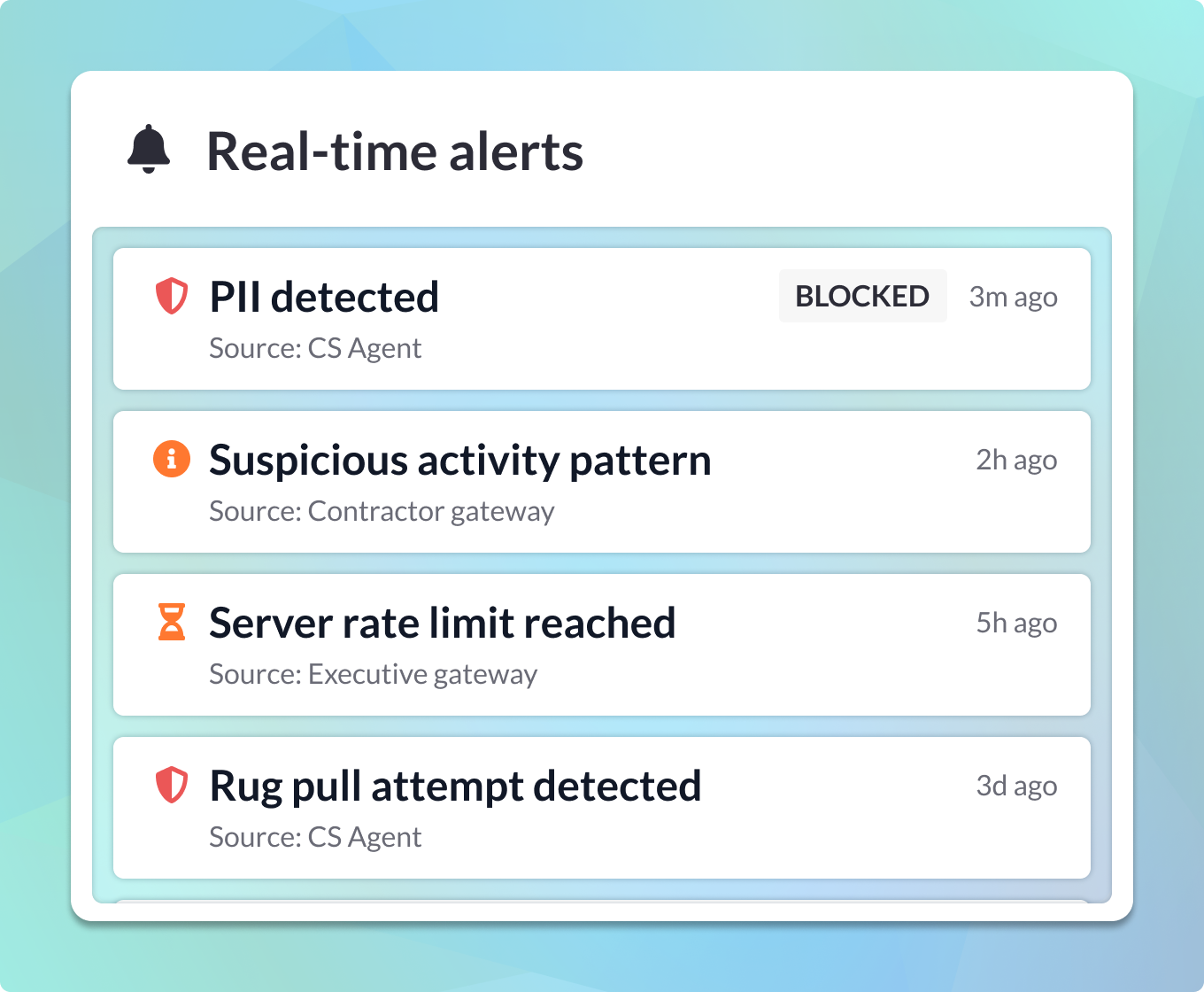
This is where AI-SPM connects to your active security operations. Findings feed into your SIEM. Alerts trigger in your normal workflow. The goal is not to build a separate monitoring silo, but to expand your existing security monitoring to cover AI-specific risks.
Policy Enforcement
Monitoring without enforcement is just a dashboard. AI-SPM lets you define and enforce policies: which data sources may feed training pipelines, which service accounts may access production models, which AI services are cleared for use, and what authentication is required for inference endpoints.
How to Get Visibility into Your AI Attack Surface
Start with what is currently running, not with what you intend to deploy.
1. Audit Current Deployments
Most security teams find their AI attack surface is larger than expected. Engineers adopt managed AI services straight through cloud consoles. Data scientists launch self-hosted models in development environments that quietly turn into production dependencies. The first step is an honest inventory.
2. Map Assets and Identities
Map every AI service, model, and pipeline to the data it touches and the identities controlling it. Pay close attention to service accounts. A shared service account accessing an AI pipeline hides which person triggered which action, and SOC 2 AND HIPAA both expect attributable records. You need per-user identity or, at minimum, a documented path from service account actions back to the human who started them.
3. Secure Agent Connections
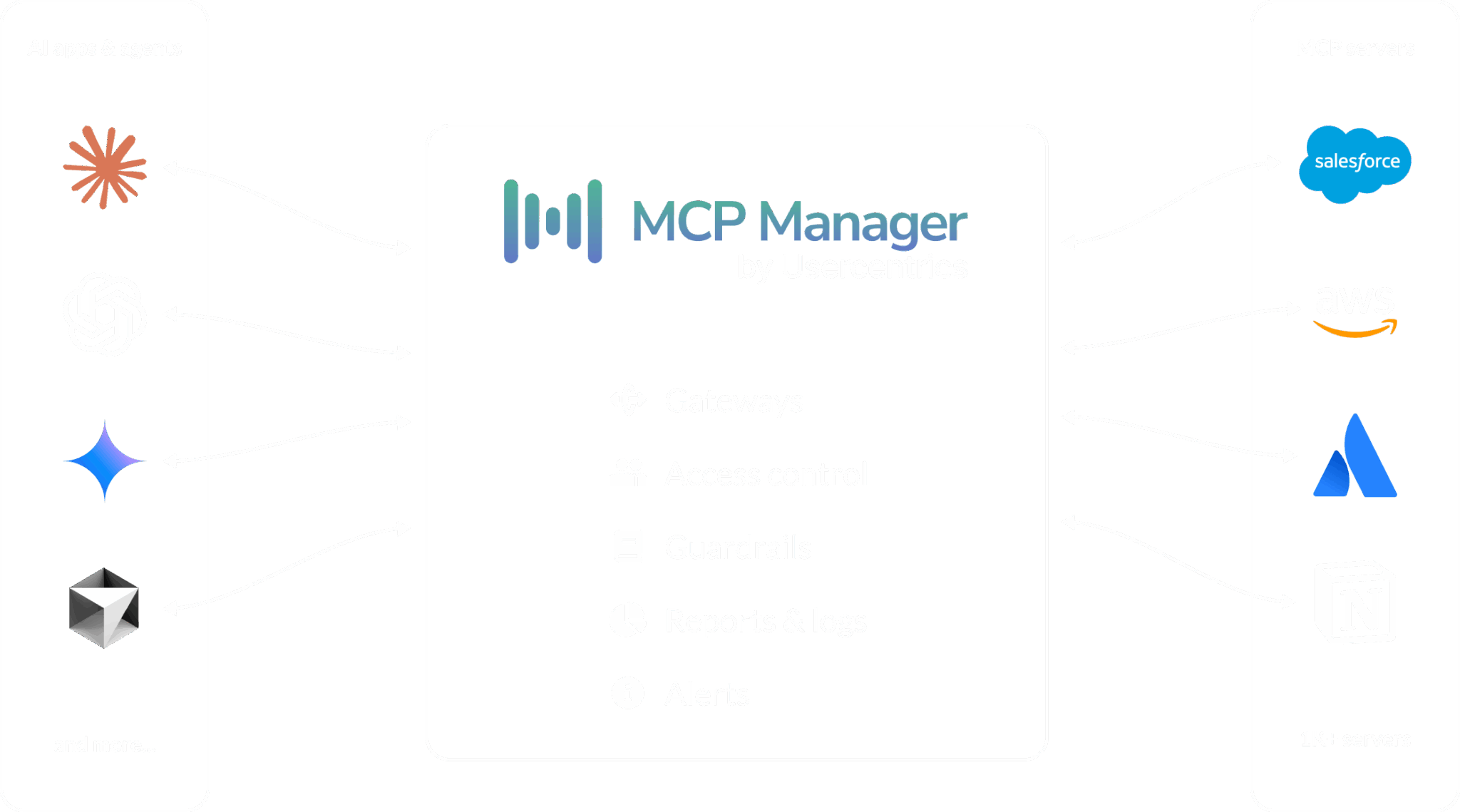
For agent-to-tool connections specifically, where AI agents connect to business systems using protocols like MCP, the attack surface includes every tool and data source an agent can reach. An MCP gateway gives you a central point for visibility and control over those connections, complete with audit logs that attribute every action to a specific user. This is the layer where AI-SPM principles meet the everyday reality of agents accessing your CRM, ticketing system, and code repositories.
What AI-SPM Includes vs. Traditional CSPM
AI-SPM does not replace CSPM. It provides an extra layer that covers areas CSPM was never built to inspect.
| Capability | CSPM | DSPM | AI-SPM |
|---|---|---|---|
| Cloud infrastructure misconfiguration | Yes | No | No |
| Sensitive data discovery and classification | No | Yes | Partial (training data) |
| AI model and pipeline inventory | No | No | Yes |
| Training data risk assessment | No | Partial | Yes |
| Inference endpoint security | No | No | Yes |
| AI service account permissions | Partial | No | Yes |
| Training-source and weight-exposure risk | No | No | Yes |
| Agent-to-tool connection governance | No | No | No (runtime gateway layer) |
CSPM shows that your cloud is set up correctly. DSPM confirms your sensitive data sits where it belongs. AI-SPM shows that your AI workloads are not introducing risks that neither tool can detect.
If you run AI in production, you need all three. They protect different areas.
How to Continuously Monitor AI and Agent Risk
Continuous monitoring for AI risk requires three elements working together:
- Automated discovery that runs on a schedule, rather than on request. New AI assets appear all the time. If your inventory relies on a quarterly spreadsheet, it is already outdated.
- Policy-as-code that checks every new and current AI asset against your security standards. When a new model deploys with a service account holding broader permissions than your policy permits, that action should trigger an alert immediately rather than waiting for the next review cycle.
- Integration with your current observability stack. AI-SPM findings should flow into Splunk, Datadog, or whichever tool your security team relies on. MCP Manager, for instance, exports audit logs over OTel to whatever OTel-compatible destination you have in your observability stack. This way, agent-to-tool activity sits alongside the rest of your security data instead of residing in a separate console.
The effective approach: treat AI assets with the same steady posture management rigor you already apply to cloud infrastructure. The tooling is newer, but the discipline remains the same.
Related Terms and Comparisons
- CSPM (Cloud Security Posture Management): Tracks cloud infrastructure for misconfigurations. Covers compute, storage, and networking. Does not cover AI-specific assets.
- DSPM (Data Security Posture Management): Finds and classifies sensitive data across cloud environments. Overlaps with AI-SPM when training data holds regulated information, but does not cover models, pipelines, or inference endpoints.
- CNAPP (Cloud-Native Application Protection Platform): A broader platform category combining CSPM, CWPP, and sometimes DSPM and AI-SPM into one product. Wiz, Palo Alto, and CrowdStrike all position their AI-SPM features inside a CNAPP framework.
- Shadow AI: AI tools, agents, and services brought in without IT or security clearance. AI-SPM discovery finds the share running in your cloud accounts. What a developer runs on their own workstation stays invisible to a cloud scanner, whihc is why agent-to-tool governance has to cover local MCP servers as well.
MCP gateway: A runtime governance layer for AI agent connections to external tools and data. While AI-SPM targets cloud AI posture (models, pipelines, data), an MCP gateway targets what agents can access and perform through MCP servers, using guardrails, PII redaction, and per-user audit trails.
AI-SPM Is a Starting Point, Not a Finish Line
AI security posture management gives you a foundation for visibility. You cannot manage what you have not cataloged, and you cannot enforce rules against risks you have not found. However, posture management alone does not govern what happens during runtime when an agent connects to your production systems and begins reading data.
For the cloud infrastructure layer, AI-SPM tools from vendors like Wiz, CrowdStrike, and Palo Alto handle discovery and misconfigurations. For the agent-to-tool layer, where AI connects to your business systems via MCP, MCP Manager delivers the runtime governance, guardrails, and audit logging that posture management identifies as necessary but cannot enforce on its own.
The two systems support each other. Posture management spots the gaps, and runtime governance fills them.
FAQ
What is AI security posture management (AI-SPM)?
AI-SPM is a security approach that finds, inventories, and continuously checks AI models, training data, ML pipelines, and AI services across cloud setups. It highlights AI-specific risks such as exposed model weights, over-permissioned service accounts, and training data containing sensitive details.
How is AI-SPM different from CSPM?
CSPM tracks cloud infrastructure misconfigurations. AI-SPM tracks AI-specific assets that CSPM cannot spot: models, inference endpoints, training pipelines, and the data moving through them. They protect different layers of the same environment.
Do I need AI-SPM if I already have DSPM?
DSPM locates sensitive data. AI-SPM locates AI assets and determines if those assets introduce risks, including sensitive data exposure. DSPM will not flag an unauthenticated inference endpoint or an over-permissioned model service account. You likely need both.
How does AI-SPM relate to MCP security?
AI-SPM centers on cloud AI posture: models, pipelines, and services. MCP security centers on the links between AI agents and external tools. An MCP gateway like MCP Manager governs what agents can reach at runtime, serving as the enforcement layer that AI-SPM findings point toward.